
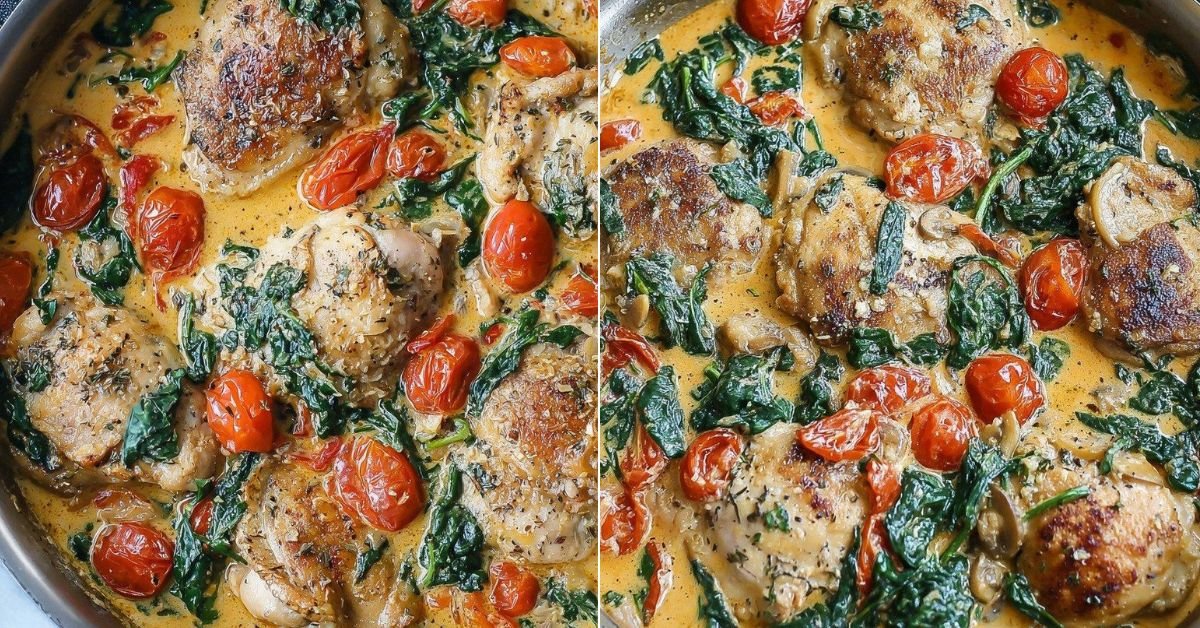
1) What I Learned Testing One Pan Tuscan Chicken Thighs
Dry chicken in a creamy skillet sauce is frustrating because the dish looks rich but tastes flat. I’m Lisa, and after a few rushed batches where the thighs steamed instead of browned, I learned that creamy tuscan chicken thighs need patience before anything else. Once I stopped moving the chicken too soon and used the broth to pull every browned bit into the sauce, the whole pan changed. The sun-dried tomatoes, spinach, cream, and parmesan became silky instead of heavy. This one pan tuscan chicken thighs recipe feels like calm comfort at the end of a long day, especially when dinner needs to taste cared for without creating a sink full of dishes.
Table of Contents
- 1) What I Learned Testing One Pan Tuscan Chicken Thighs
- 2) Key Takeaways
- 3) Easy One Pan Tuscan Chicken Thighs Recipe
- 4) Why Most One Pan Tuscan Chicken Thighs Recipes Fail
- 5) Ingredients for One Pan Tuscan Chicken Thighs
- 6) How to Make One Pan Tuscan Chicken Thighs
- 7) Recipe Card: One Pan Tuscan Chicken Thighs
- 8) Tips for Making One Pan Tuscan Chicken Thighs
- 9) Common Mistakes & Fixes
- 10) How to Tell One Pan Tuscan Chicken Thighs Are Perfect
- 11) Professional Secrets Behind Better One Pan Tuscan Chicken Thighs
- 12) Best Dishes or Pairings to Serve With One Pan Tuscan Chicken Thighs
- 13) Making One Pan Tuscan Chicken Thighs Ahead of Time
- 14) Storing Leftover One Pan Tuscan Chicken Thighs
- 15) FAQ (Real Cooking Questions)
- 16) Save This One Pan Tuscan Chicken Thighs Recipe
- 17) Conclusion
- 18) Nutrition
2) Key Takeaways
- Patting the chicken thighs dry is not optional; surface moisture blocks browning and makes the sauce taste weaker.
- The chicken should release from the skillet before flipping, which is the clearest sign that a proper sear has formed.
- Deglazing with broth turns the browned bits into flavor, giving creamy tuscan chicken thighs a deeper, more savory sauce.
- Heavy cream and parmesan should be added after the sauce reduces, so the final texture stays smooth instead of thin or broken.
3) Easy One Pan Tuscan Chicken Thighs Recipe
One pan tuscan chicken thighs work because every layer stays in the same skillet. The chicken browns first, then the onion, garlic, tomatoes, and broth pick up the flavor left behind. That matters because boneless skinless chicken thighs do not have skin or bones to protect them, so the sauce has to carry depth without overcooking the meat.
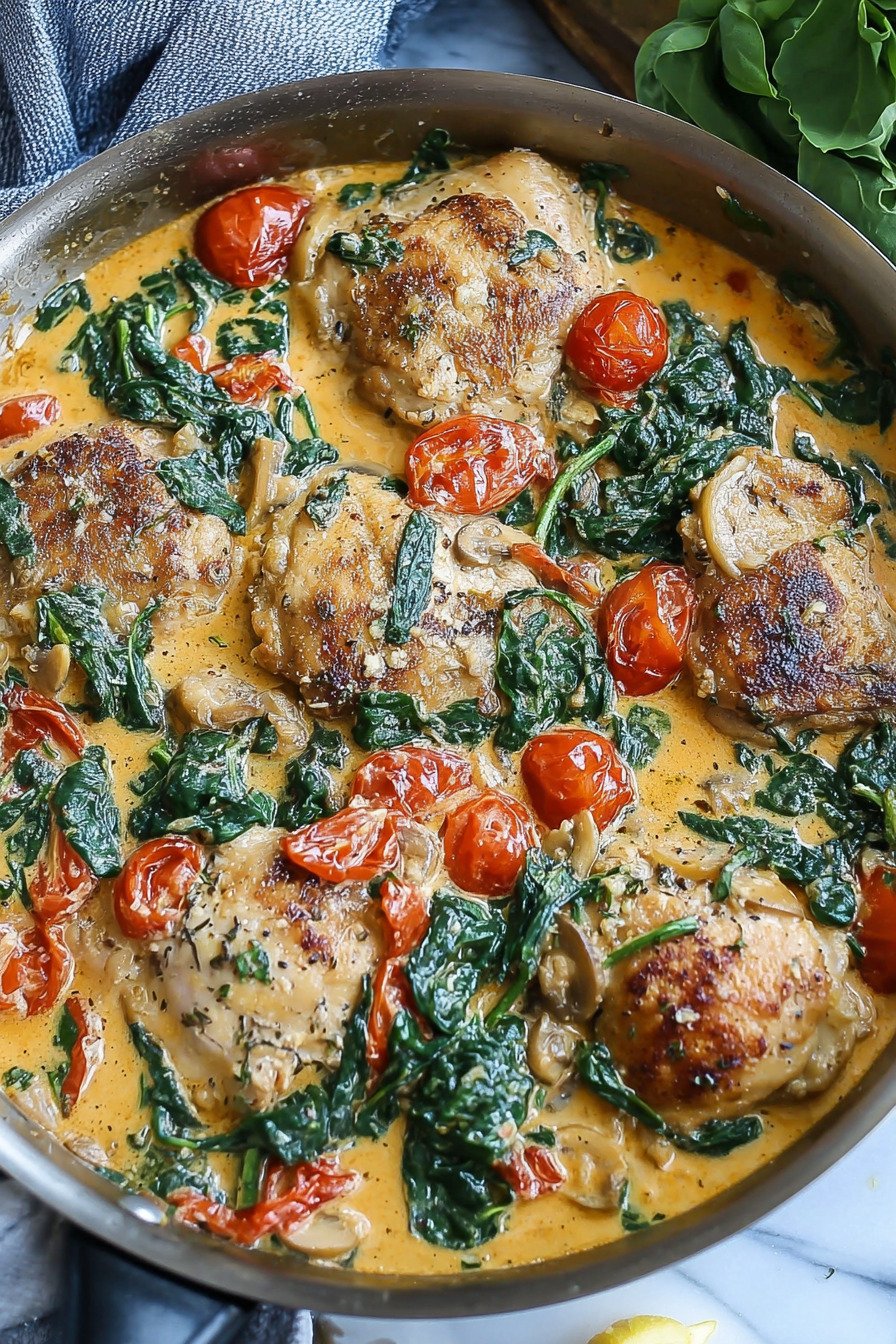
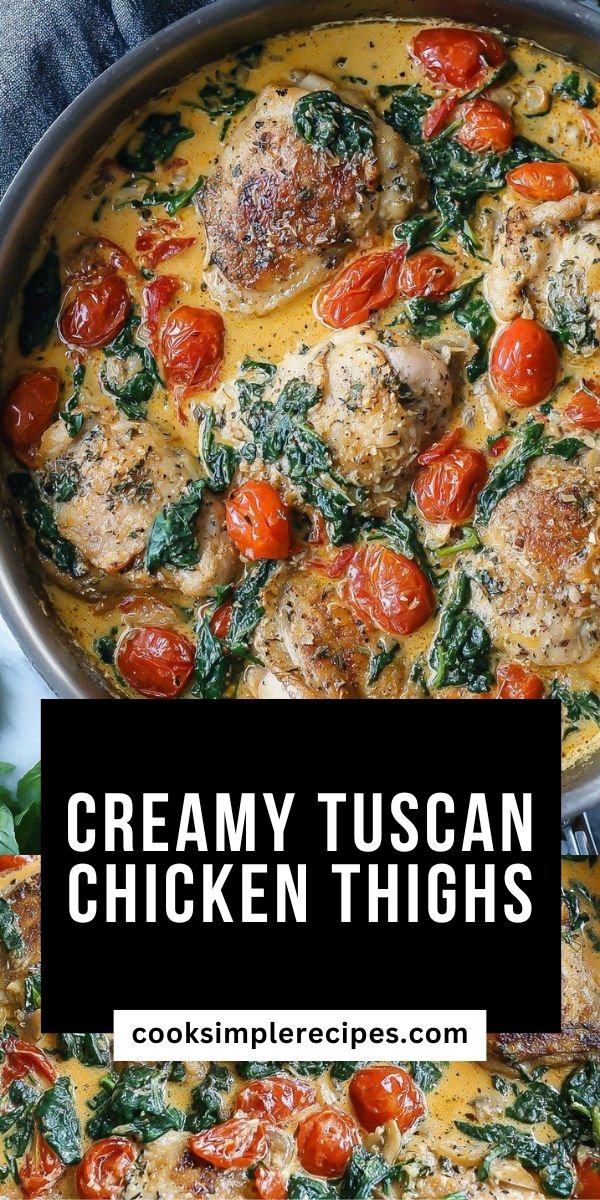
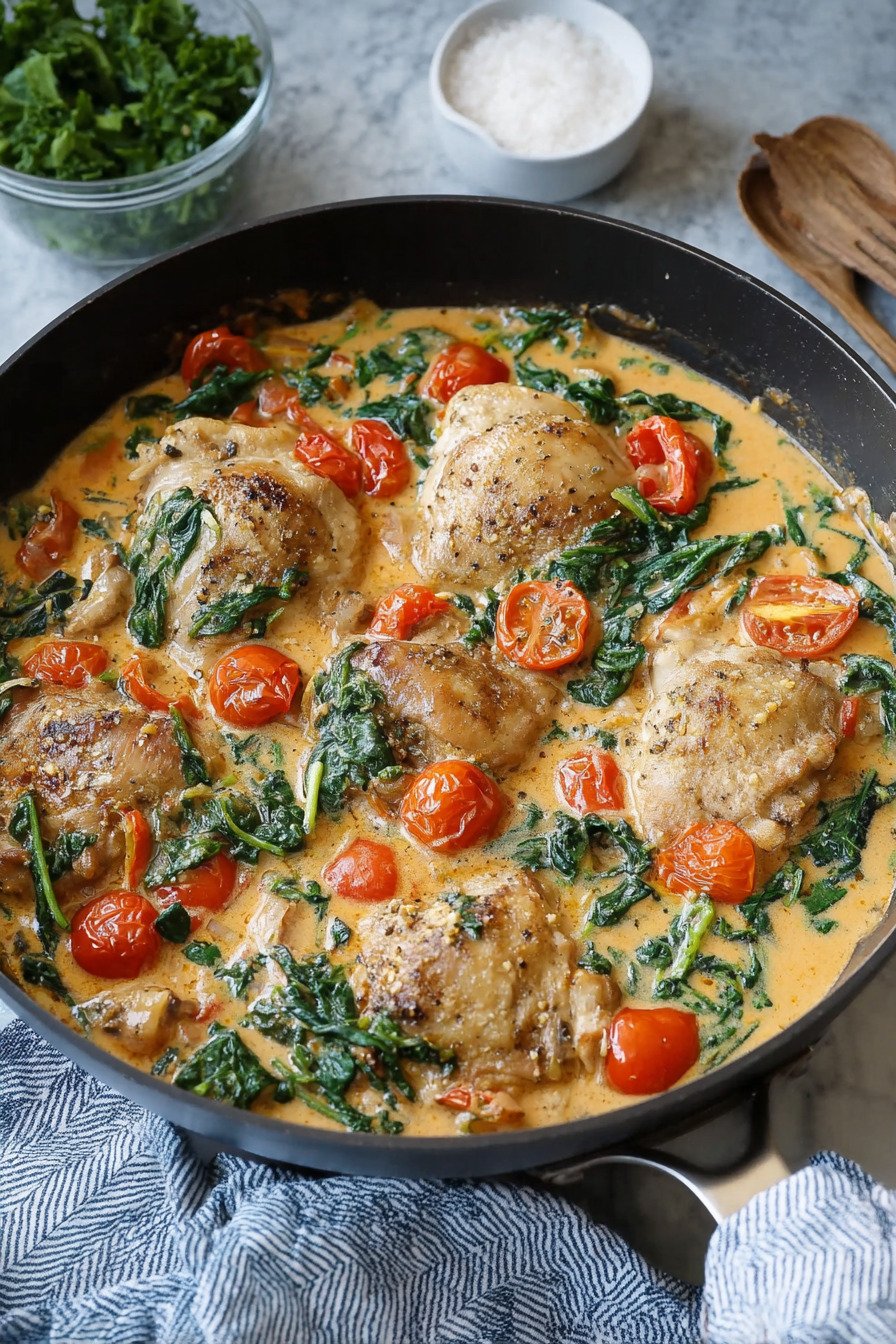
The goal is a skillet of juicy chicken in a creamy sauce that tastes savory, bright, and gently sweet from the blistered cherry tomatoes and sun-dried tomatoes. The spinach should be wilted but still green, the parmesan should melt into the sauce, and the cream should coat the chicken without feeling greasy. When cooked with control, this becomes a creamy tuscan chicken dinner that feels rich but still balanced.
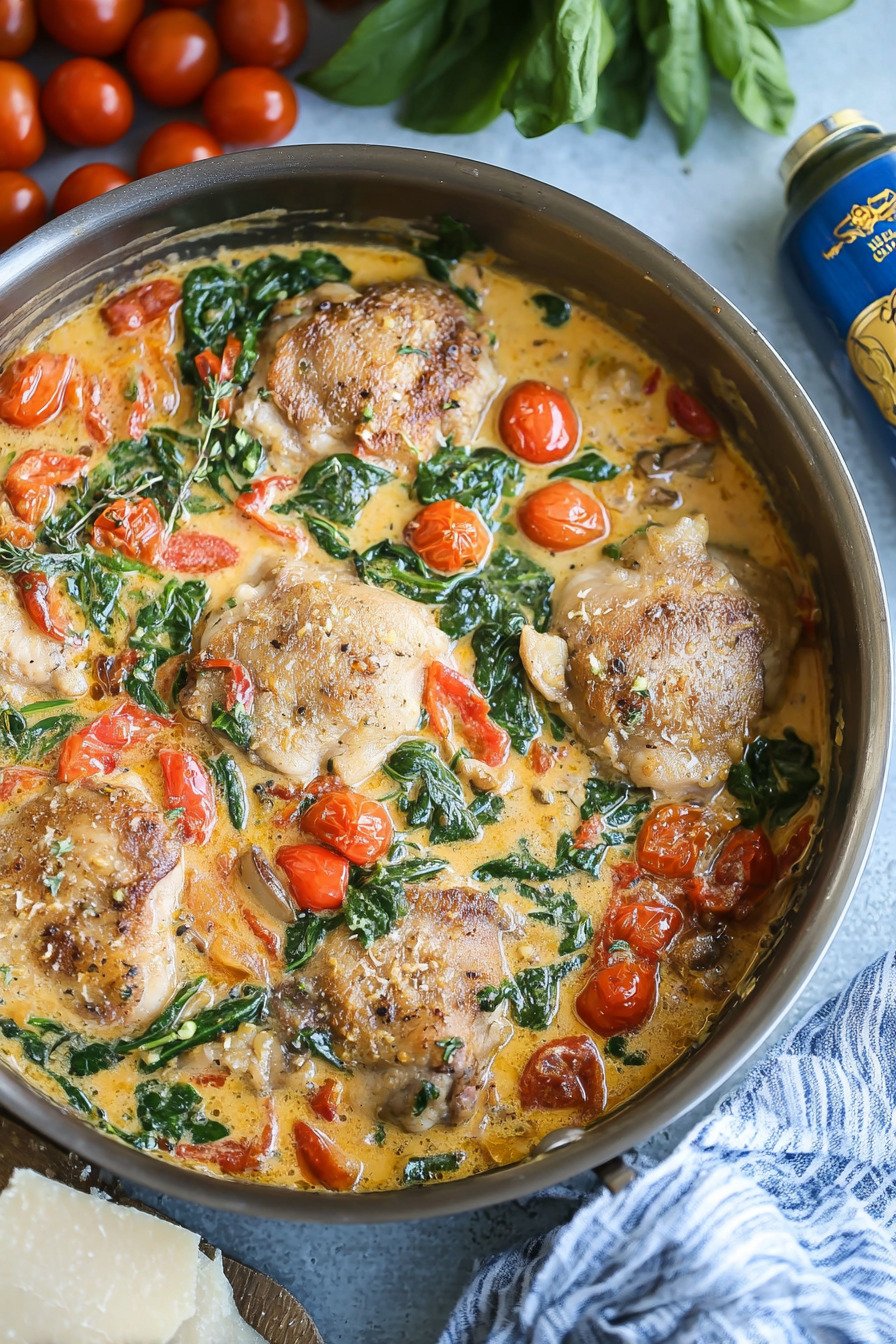
4) Why Most One Pan Tuscan Chicken Thighs Recipes Fail
Most problems start before the sauce is even made. If the chicken thighs are not dried well, they steam against the skillet instead of browning. That leaves the surface pale and prevents the pan from developing the browned bits that give tuscan chicken thighs their deeper flavor.
Another common failure is moving the chicken too early. When chicken sticks, it usually means the crust has not finished forming. Pulling it too soon tears the surface and leaves patchy browning. Waiting until the thighs release naturally creates better color and keeps more flavor in the pan.
The sauce can also fail if the broth is added but not reduced. Reduction concentrates flavor and keeps the cream from tasting diluted. If the cream is added while the pan is too hot or boiling aggressively, the sauce can separate or turn thin around the edges.
Sun-dried tomatoes and parmesan both bring salt, so seasoning heavily at the beginning can make the final sauce too sharp. Season in layers, then taste near the end. The best tuscan chicken with sun dried tomatoes tastes savory and rounded, not salty or flat.
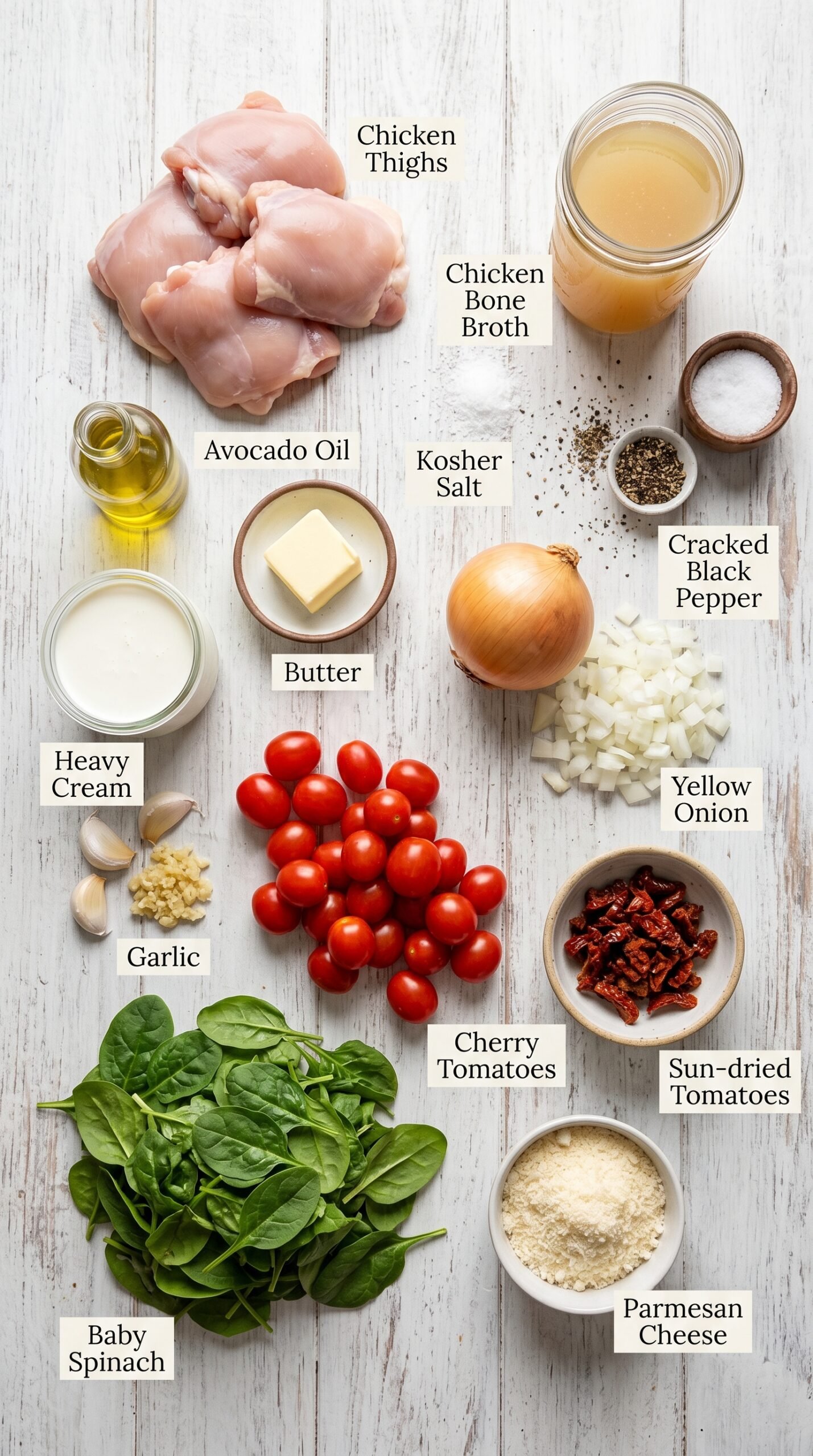
5) Ingredients for One Pan Tuscan Chicken Thighs
Boneless skinless chicken thighs: These stay juicier than chicken breast and cook quickly in a skillet. Use them at the start of the recipe, after drying and seasoning. Replacing them with chicken breast changes the timing and increases the risk of dryness.
Avocado oil: This helps the chicken sear because it handles medium-high heat well. Use it once the skillet is hot but not smoking. If replaced with a lower-heat oil, the pan may smoke or the chicken may brown unevenly.
Kosher salt and cracked black pepper: These season both the chicken and sauce in stages. Salt helps the chicken taste seasoned throughout, while pepper adds a gentle savory edge. Adding all the salt at once can make the sauce too salty after the parmesan and sun-dried tomatoes go in.
Butter: Butter softens the onion and garlic while adding roundness to the sauce. Use it after removing the chicken, when the pan still holds the browned bits. If skipped, the sauce may taste less rich and less cohesive.
Yellow onion: Diced small onion melts into the sauce and builds sweetness. It should be added before the broth so it has time to soften. Larger pieces can stay firm and distract from the creamy texture.
Garlic: Garlic gives the sauce its aromatic base. Add it with the onion and cook just until fragrant. If it browns too hard, the sauce can taste bitter.
Cherry tomatoes: These blister in the pan and add fresh acidity. They should soften before the broth is added. If replaced with canned tomatoes, the sauce becomes looser and less skillet-fresh.
Chicken bone broth or chicken broth: Broth deglazes the pan and pulls up the browned bits from searing. It also forms the base of the sauce before cream is added. Water would thin the flavor and make the dish taste less developed.
Sun-dried tomatoes: These bring concentrated sweet-savory flavor to tuscan sun dried tomato chicken. Drain them well so the sauce does not turn oily. Adding too many can overpower the cream and parmesan.
Baby spinach: Spinach adds color, freshness, and a soft vegetable texture. Add it near the end so it wilts without overcooking. If added too early, it can turn dull and watery.
Heavy cream or half and half: Cream gives the sauce body and smoothness. Heavy cream makes the richest sauce, while half and half creates a lighter finish but needs gentler heat to avoid separation.
Parmesan cheese: Parmesan thickens, seasons, and adds savory depth. Stir it in after the cream so it melts smoothly. Pre-grated cheese can sometimes make the sauce grainier than freshly grated parmesan.
- Chicken thighs vs chicken breast: Thighs tolerate skillet cooking better and stay juicier; breast needs stricter timing to avoid drying out.
- Heavy cream vs half and half: Heavy cream gives a thicker sauce, while half and half is lighter but more sensitive to high heat.
- Sun-dried tomatoes vs fresh tomatoes: Sun-dried tomatoes add concentrated flavor, while cherry tomatoes bring freshness and acidity.
- Still chicken vs moved chicken: Leaving the thighs alone creates browning; moving them too much causes steaming and torn surfaces.
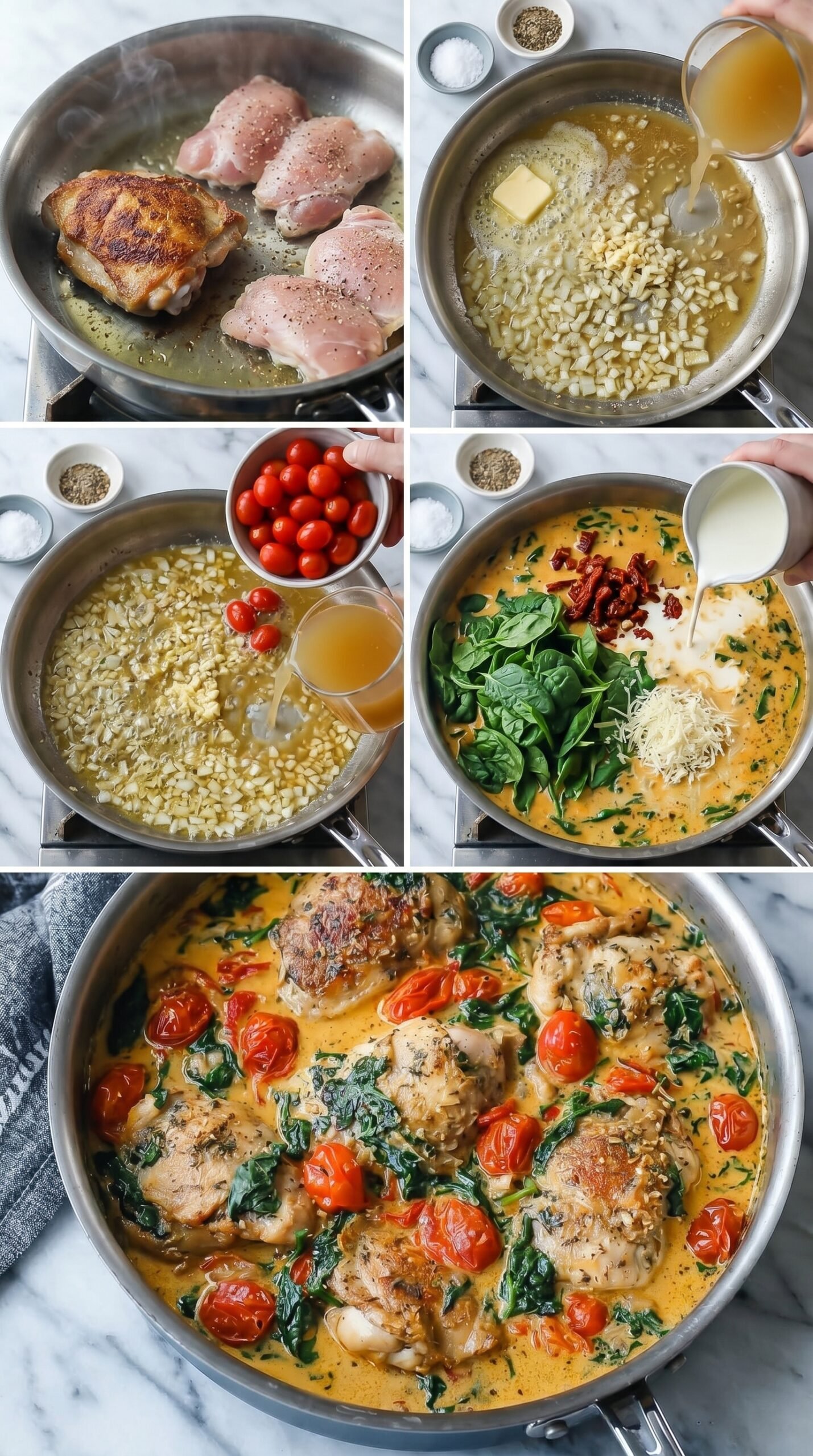
6) How to Make One Pan Tuscan Chicken Thighs
Step 1: Dry the chicken thighs with a paper towel and season them with kosher salt and cracked black pepper. The surface should feel tacky, not wet, before it touches the skillet.
Step 2: Heat the skillet over medium-high heat, add avocado oil, then add the chicken smooth side down. Reduce to medium and let the thighs cook for 5 to 6 minutes without moving them. They should release easily when the sear is ready.
Step 3: Flip the chicken and cook the second side for another 5 to 6 minutes. Remove the thighs to a plate. This pause protects the chicken from overcooking while the sauce develops.
Step 4: Add butter, diced onion, and minced garlic to the same pan. Stir for 2 to 3 minutes until fragrant, watching closely so the garlic softens without burning.
Step 5: Add cherry tomatoes, kosher salt, and cracked black pepper. Once the tomatoes blister, pour in the broth and scrape the bottom of the pan so the browned bits dissolve into the sauce.
Step 6: Let the sauce reduce by about one-quarter, then add the sun-dried tomatoes and baby spinach. Stir until the spinach just begins to wilt, then add the cream and parmesan. The sauce should look creamy and lightly thickened.
Step 7: Return the chicken and any plate juices to the skillet. Simmer gently until the chicken is warmed through and reaches a safe internal temperature of 165°F. Spoon the sauce over the thighs before serving.
7) Recipe Card: One Pan Tuscan Chicken Thighs
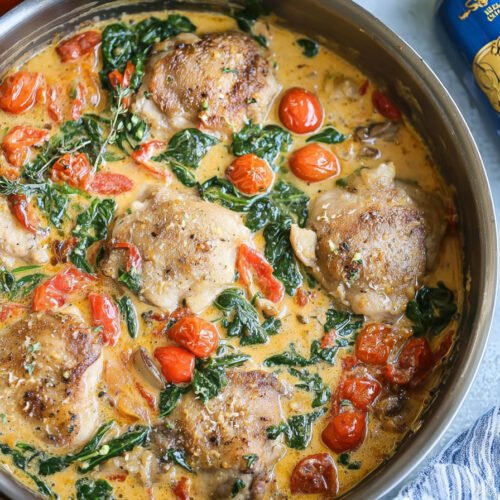
One Pan Tuscan Chicken Thighs with Creamy Sun-Dried Tomato Sauce
Ingredients
Chicken Thighs
- 1 lb. chicken thighs, 4 boneless skinless, Smart Chicken thighs, patted very dry so they sear instead of steam
- 1.5 tablespoons avocado oil, for searing the chicken over steady medium-high heat
- kosher salt, season chicken evenly before it hits the skillet
- cracked black pepper, season chicken for a savory crust
Sauce and Vegetables
- 1-2 tablespoons butter, to saute the onions and garlic and build flavor in the same pan
- 1 cup yellow onion, diced small so it softens quickly into the sauce
- 1 tablespoon garlic, minced, 2-3 cloves depending on size, added after the onion to avoid scorching
- 1 cup cherry tomatoes, left whole so they blister and release sweetness
- kosher salt, to taste, added in layers for better sauce balance
- cracked black pepper, to taste, for gentle heat and depth
- 1 cup chicken bone broth, or chicken broth, used to deglaze the pan and loosen browned bits
- ¼ cup sun-dried tomatoes, roughly chopped, drained, for concentrated Tuscan-style flavor
- 2-3 ounces baby spinach, heaping handful, added near the end so it wilts without turning dull
- ½ cup heavy cream, or half and half, for a smooth creamy sauce
- ¼ cup parmesan cheese, grated, stirred in to thicken and season the sauce
Instructions
- Pat the chicken thighs dry with a paper towel, then season both sides with kosher salt and cracked black pepper. Dry chicken browns better and helps prevent a watery skillet sauce.
- Heat a skillet over medium-high heat and add the avocado oil. When the oil is hot but not smoking, place the chicken thighs smooth side down, reduce the heat to medium, and cook for 5-6 minutes until they release easily from the pan.
- Do not slide the chicken around while it sears, or the crust will tear and the thighs will steam. Flip and cook the second side for another 5-6 minutes, then transfer the chicken to a plate.
- In the same pan, add the butter, diced onion, and minced garlic. Sauté for 2-3 minutes, stirring often, until the onion begins to soften and the garlic smells fragrant but not browned.
- Add the cherry tomatoes, then season with kosher salt and cracked black pepper. Once the tomatoes start to blister, pour in the chicken bone broth and scrape the bottom of the pan to release the browned bits into the sauce.
- Let the sauce reduce by about one-quarter, then stir in the roughly chopped sun-dried tomatoes and baby spinach. Sauté just until the spinach begins to wilt, then add the heavy cream and grated parmesan cheese and stir until smooth.
- Nestle the chicken thighs and any juices from the plate back into the pan. Simmer gently until the chicken is warmed through and reaches 165°F in the thickest part, then serve hot with the creamy sauce spooned over the top.
8) Tips for Making One Pan Tuscan Chicken Thighs
Use a skillet wide enough to hold the chicken without crowding. If the thighs touch too closely, trapped steam slows browning and makes the surface less flavorful. A little open space around each piece helps the oil stay hot and gives the chicken a better sear.
Keep the heat controlled after the first sear. Medium-high heat starts the browning, but medium heat keeps the thighs from burning before the inside cooks. Once cream enters the pan, the sauce should simmer gently, not boil hard.
Scrape the skillet thoroughly after adding broth. Those browned bits are the flavor bridge between the chicken and the creamy sauce. If you skip this, the sauce can taste like cream with vegetables instead of a fully developed creamy tuscan chicken thighs skillet.
Add spinach late and stop cooking once it wilts. The leaves should soften into the sauce without becoming limp and watery. This keeps the final pan colorful and prevents the sauce from thinning.
9) Common Mistakes & Fixes
Problem: The chicken looks pale instead of browned. Cause: The thighs were wet, crowded, or moved too soon. Fix: Pat them dry, leave space in the pan, and wait until they release before flipping.
Problem: The sauce tastes thin. Cause: The broth was not reduced before the cream was added. Fix: Simmer the broth until it reduces by about one-quarter, then add cream and parmesan.
Problem: The sauce separates. Cause: The cream boiled too hard or the heat was too high. Fix: Lower the heat before adding cream and keep the sauce at a gentle simmer.
Problem: The dish tastes too salty. Cause: Sun-dried tomatoes and parmesan were not considered when seasoning. Fix: Season lightly early, then taste after the cheese melts before adding more salt.
Problem: The spinach turns watery. Cause: It cooked too long. Fix: Add spinach near the end and stop once it just wilts into the sauce.
10) How to Tell One Pan Tuscan Chicken Thighs Are Perfect
The chicken should be golden in patches where it touched the skillet, with a tender interior that cuts easily. The sauce should coat the back of a spoon without looking greasy, broken, or watery. When you drag a spoon through the pan, the sauce should slowly flow back together instead of running like broth.
The tomatoes should look blistered and slightly softened, not collapsed into mush. The spinach should be wilted but still green. The aroma should be savory from the chicken and parmesan, slightly sweet from the tomatoes, and gently garlicky without any bitter burnt smell.
A failure sign is chicken that feels firm and dry before it even returns to the sauce. Another warning sign is cream separating around the edges of the pan. If that happens, lower the heat immediately and stir gently rather than boiling harder.
11) Professional Secrets Behind Better One Pan Tuscan Chicken Thighs
The biggest professional habit is building flavor in sequence. First, brown the protein. Next, cook aromatics in the same pan. Then deglaze and reduce before adding dairy. This order makes the sauce taste layered instead of rushed.
Another useful technique is adding the chicken juices back to the pan. The liquid on the resting plate may not look important, but it carries seasoning and meat flavor. Stirring it into the sauce gives one pan tuscan chicken thighs a more complete, rounded taste.
Finally, treat parmesan as both seasoning and thickener. Add it once the cream is in the pan and stir until smooth. If the sauce tastes almost finished but slightly flat, a small adjustment of pepper or salt at the end usually works better than adding more cheese.
12) Best Dishes or Pairings to Serve With One Pan Tuscan Chicken Thighs
Serve creamy tuscan chicken thighs with something that can catch the sauce. Rice, buttered noodles, mashed potatoes, roasted potatoes, or crusty bread all work well because they balance the richness without competing with the sun-dried tomato flavor.
For a lighter plate, pair the chicken with roasted broccoli, green beans, sautéed zucchini, cauliflower rice, or a crisp green salad. The sauce is creamy, so fresh vegetables or simple sides keep the meal from feeling too heavy.
If serving this as a family dinner, place the skillet in the center of the table and spoon extra sauce over each portion. The tomatoes and spinach make the pan look colorful, while the parmesan cream sauce gives the meal a comforting finish.

13) Making One Pan Tuscan Chicken Thighs Ahead of Time
You can prepare several parts ahead without hurting the texture. Dice the onion, mince the garlic, chop and drain the sun-dried tomatoes, and season the chicken a few hours in advance. Keep everything chilled until cooking.
For the best texture, cook the full dish close to serving time. Cream sauces are at their smoothest when freshly made. If you need to make it ahead completely, reheat slowly over low heat and add a small splash of broth or cream to loosen the sauce.
Avoid boiling the reheated sauce. Gentle heat protects the dairy and keeps the chicken from tightening. This is especially important if you used half and half instead of heavy cream.
14) Storing Leftover One Pan Tuscan Chicken Thighs
Store leftover chicken and sauce together in an airtight container in the refrigerator for up to 3 days. Keeping the sauce with the chicken helps protect the meat from drying out.
Reheat leftovers in a covered skillet over low heat until warmed through. Add a splash of broth or cream if the sauce has thickened in the refrigerator. Stir gently so the spinach and tomatoes stay intact.
Freezing is possible, but cream sauces can look slightly separated after thawing. If you freeze leftovers, thaw them overnight in the refrigerator and reheat slowly while stirring. Leftover tuscan sun dried tomato chicken can also be sliced and served over pasta, rice, or roasted vegetables.
15) FAQ (Real Cooking Questions)
Can I use chicken breasts instead of thighs? Yes, but the cooking time will change. Chicken breasts dry out faster, so use an instant-read thermometer and remove them once they reach 165°F. Thighs are more forgiving for this boneless skinless chicken thighs recipe style.
Can I use half and half instead of heavy cream? Yes. Half and half makes a lighter sauce, but keep the heat low once it goes in. Heavy boiling can make a lighter dairy sauce separate.
Why did my chicken stick to the pan? Chicken often sticks when it has not finished searing. Let it cook undisturbed until it releases naturally. If the pan was not hot enough or the chicken was wet, sticking is more likely.
Can I add more spinach? Yes, but add it in batches near the end. Too much spinach added early can release extra moisture and thin the creamy sauce.
How do I make the sauce thicker? Reduce the broth before adding cream, use freshly grated parmesan, and simmer gently after the chicken returns to the pan. Do not boil hard, or the sauce may break instead of thickening.
16) Save This One Pan Tuscan Chicken Thighs Recipe
If this One Pan Tuscan Chicken Thighs recipe helped you solve dry chicken or thin sauce, save it for a comfort-food dinner that still feels fresh. The key reminder is: dry the chicken well, let it sear undisturbed, and build the cream sauce from the browned bits in the pan.
17) Conclusion
One Pan Tuscan Chicken Thighs become better when the small steps are handled with intention. Dry chicken, rushed browning, and thin sauce are not random problems; they usually come from moisture, heat, and timing. Once you understand why the chicken needs to sear undisturbed, why the broth needs to reduce, and why the cream should simmer gently, the recipe becomes much more reliable.
The reward is a skillet of juicy chicken, blistered tomatoes, tender spinach, and a creamy parmesan sauce that tastes layered instead of rushed. That is the difference between a dish that simply looks creamy and one that actually eats like a thoughtful dinner.
18) Nutrition
Serving Size 1 portion Calories 438 Sugar 4 g Sodium 610 mg Fat 31 g Saturated Fat 12 g Carbohydrates 9 g Fiber 2 g Protein 31 g Cholesterol 152 mg




Leave a Comment