
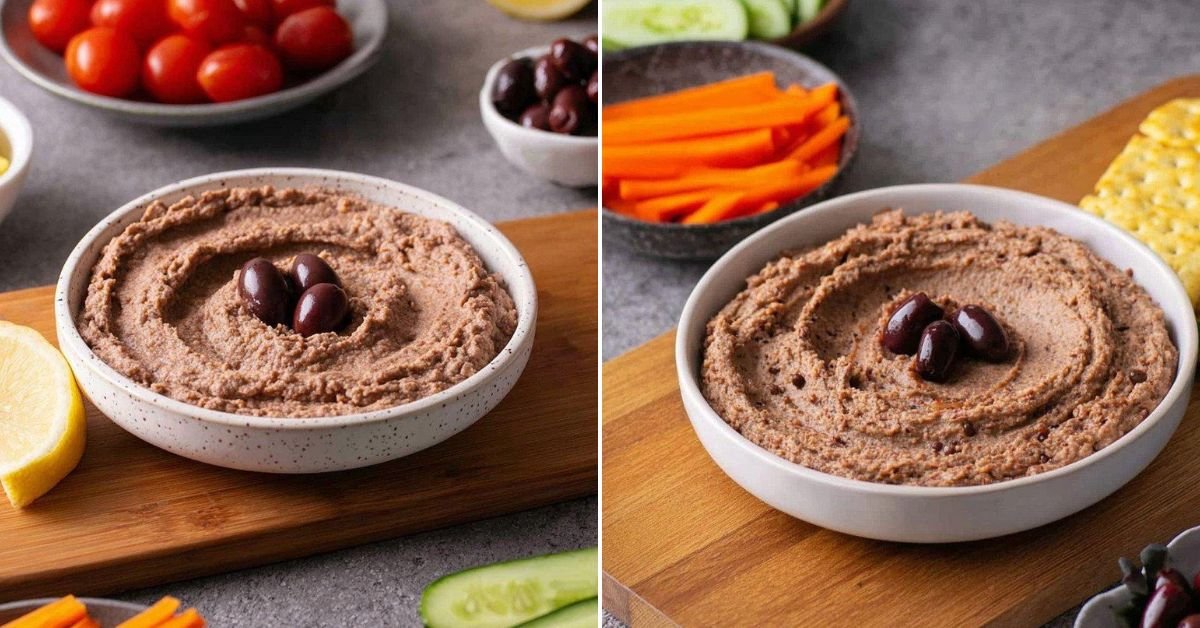
I’ve been making hummus at home for years, and let me tell you, this hummus recipe changed everything for me. When I first tossed those briny kalamata olives into my food processor, I thought I was just experimenting. Turns out, I stumbled onto what might be the best hummus recipe I’ve ever made. My kids devour it faster than I can make it, and my husband literally guards the bowl at parties. What makes this vegan hummus recipe so good? It’s got that perfect balance of creamy chickpeas and tangy olives that makes you want to keep scooping. I’ve tried so many variations over the years (including a carrot hummus recipe that was pretty good and a lemon hummus recipe that was way too tart), but this one wins every time. The kalamata olives bring this bold, mediterranean hummus recipe flavor that just works. You know what I love most? This authentic hummus recipe comes together in literally 10 minutes. Everything goes into the food processor at once. No fussing around with drizzling oil slowly or adding ingredients in stages. Just dump it all in, blend until smooth, and you’re done. I used to overthink hummus, making it in careful steps, but I’ve learned that simplicity wins. Sometimes the best recipes are the ones that don’t try too hard.
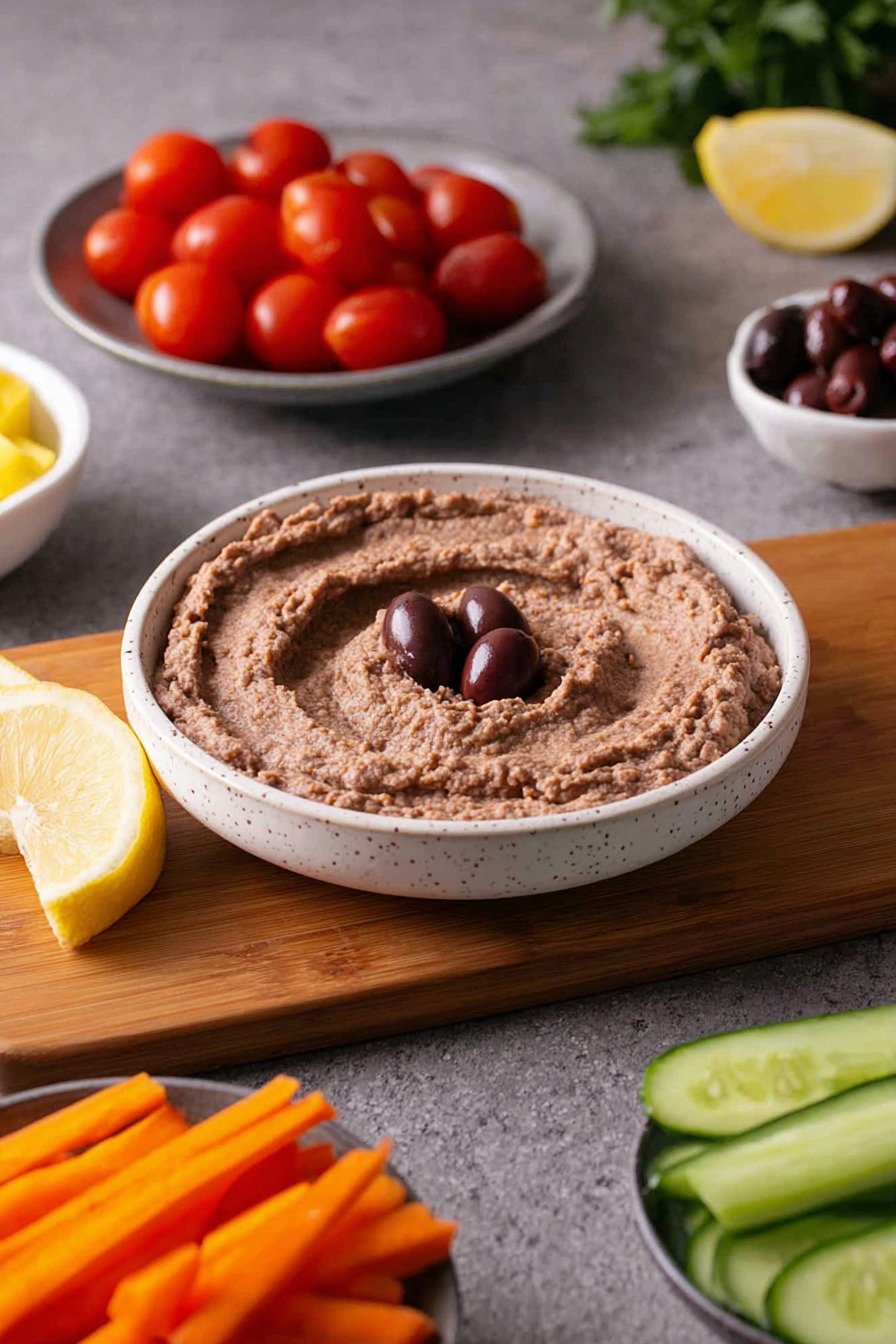
Table of Contents
- 1) Key Takeaways
- 2) Easy Best Kalamata Olive Hummus Recipe
- 3) Ingredients for Best Kalamata Olive Hummus
- 4) How to Make Best Kalamata Olive Hummus
- 5) Tips for Making Best Kalamata Olive Hummus
- 6) Making Best Kalamata Olive Hummus Ahead of Time
- 7) Storing Leftover Best Kalamata Olive Hummus
- 8) Try these appetizers next!
- 9) Best Kalamata Olive Hummus
- 10) Nutrition
1) Key Takeaways
- What makes kalamata olive hummus different from regular hummus?
- Can you really make hummus in just 10 minutes?
- Do I need to peel chickpeas for smooth hummus?
- What’s the secret to creamy hummus every time?
2) Easy Best Kalamata Olive Hummus Recipe
Let me share something with you. I’ve been making this hummus recipe for years, and it never gets old. When I first started experimenting with different hummus variations, I tried everything. The hummus recipe with carrots was interesting, but it didn’t have that bold flavor I craved. My lemon hummus recipe was way too acidic. Then I discovered kalamatas, and everything changed.
This recipe comes together faster than ordering takeout. You literally throw everything into a food processor and hit blend. No complicated steps. No fussy techniques. Just real food that tastes incredible. I’ve served this at parties where people asked if I bought it from some fancy Mediterranean restaurant. Nope, just my kitchen and 10 minutes of time.
What makes this vegan hummus recipe so good? The olives bring this briny, salty punch that balances perfectly with creamy chickpeas. It’s got more personality than your standard chickpea dip. My kids eat it with carrot sticks. My husband hoards it for his lunch. I catch myself eating it straight from the bowl with a spoon when nobody’s looking.
You don’t need fancy equipment or hard to find ingredients. Just a food processor and some pantry staples. If you’ve been intimidated by making hummus at home, this is your entry point. It’s forgiving, it’s flexible, and it’s way better than anything you’ll buy at the store. Trust me on this one.
3) Ingredients for Best Kalamata Olive Hummus
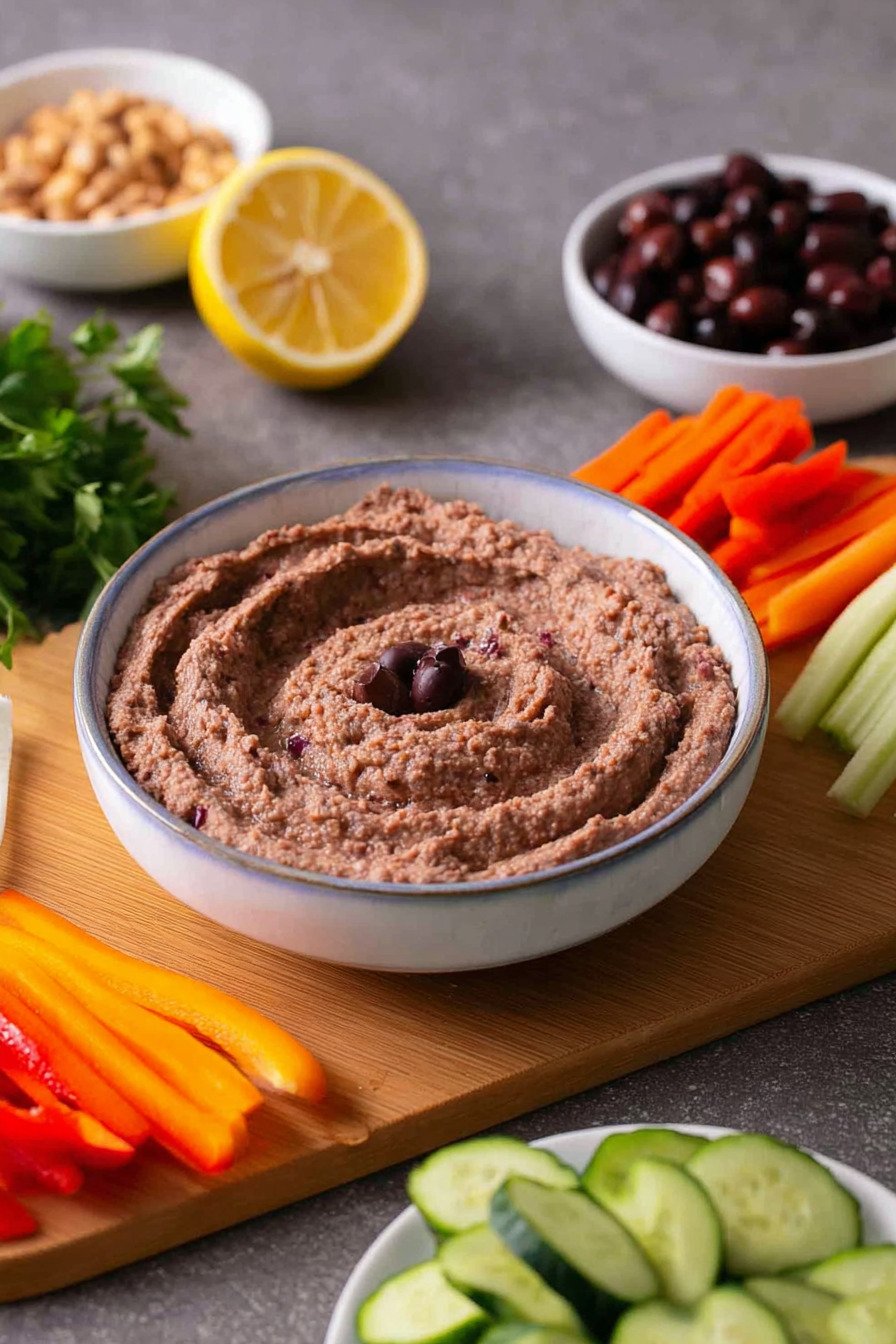
Chickpeas: I use canned chickpeas for this best hummus recipe. Why? They’re already cooked, they’re convenient, and they work beautifully. Make sure to drain them well. I usually give the can a good shake over the sink. Some people swear by peeling chickpeas for ultra smooth hummus, but I’ve never bothered and mine turns out silky every time.
Kalamata Olives: These are the stars of the show. Get the ones already pitted unless you enjoy tedious kitchen tasks. Rinse them before using to cut down on some of that intense saltiness. The olives give this mediterranean hummus recipe its distinctive flavor. They’re briny, they’re rich, and they turn basic hummus into something special.
Fresh Lemon Juice: Please use fresh lemons, not the bottled stuff. Fresh lemon juice makes such a difference in flavor. It brightens everything up and balances the richness of the tahini and olive oil. I usually need about one large lemon to get a quarter cup of juice.
Tahini: This is ground sesame seed paste, and it’s not optional. Tahini gives hummus that signature nutty flavor and creamy texture. I keep a jar in my pantry at all times. Give it a good stir before using since the oil tends to separate and float to the top.
Garlic: Two cloves might seem modest, but raw garlic is powerful. You can adjust based on how much you love garlic. I use fresh cloves, peeled and ready to go. The food processor does all the work of mincing.
Ground Cumin: This warm spice is classic in any authentic hummus recipe. It adds earthiness and depth. Don’t skip it. Just one teaspoon transforms the whole dish.
Sea Salt and Black Pepper: Season to taste. Every brand of canned chickpeas and olives has different sodium levels, so you’ll want to adjust. I start with the recipe amounts and taste at the end.
Extra Virgin Olive Oil: Good olive oil matters here. It adds richness and helps everything blend smoothly. I use it both in the hummus and sometimes drizzle a bit on top when serving.

4) How to Make Best Kalamata Olive Hummus
Step 1. Drain your chickpeas into the sink. Give them a good shake to get rid of extra liquid. Open your jar of olives and rinse them under cool water. If they’re not already pitted, now’s the time to remove those pits. Nobody wants to bite into an olive pit while snacking.
Step 2. Grab your food processor. This is where the magic happens. Toss in the drained chickpeas, rinsed olives, fresh lemon juice, tahini, peeled garlic cloves, ground cumin, sea salt, black pepper, and olive oil. Everything goes in at once. No need to add ingredients gradually like some recipes tell you.
Step 3. Put the lid on your food processor and blend. Start with a few pulses to break everything down, then let it run continuously for about one to two minutes. You want it smooth and creamy. Stop halfway through and scrape down the sides with a spatula to make sure everything gets incorporated.
Step 4. Take off the lid and taste your creation. Does it need more salt? More lemon? Maybe another drizzle of olive oil? This is your chance to adjust the flavors to your liking. I almost always add a pinch more salt at this stage.
Step 5. Check the consistency. If it’s thicker than you want, add those extra two tablespoons of olive oil or a splash of water. Blend again for another 30 seconds. Keep going until you get the texture that makes you happy.
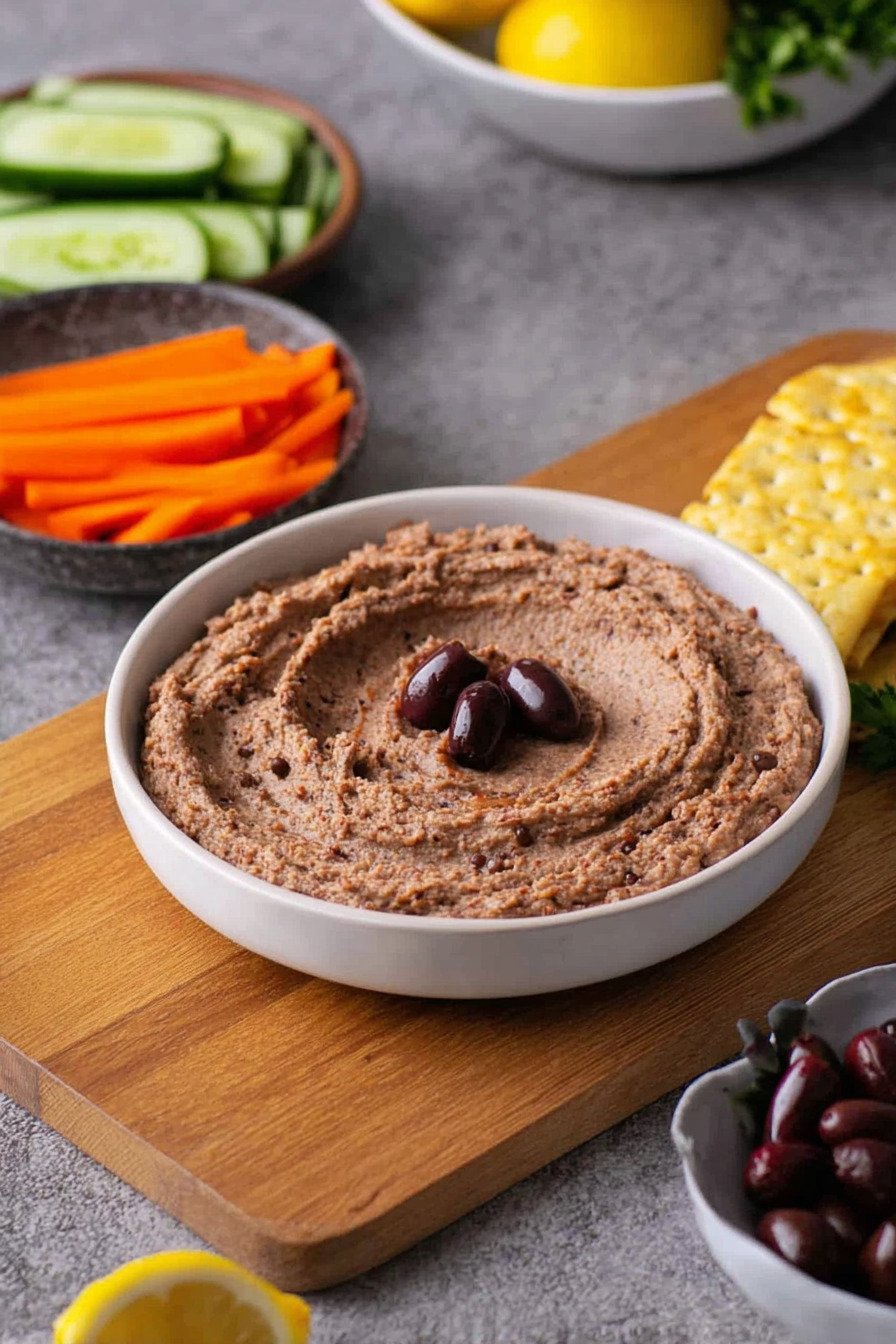
Step 6. Scoop the hummus into a serving bowl. I like to make a little well in the center and drizzle some olive oil there. Sometimes I’ll add a few whole olives on top or a sprinkle of paprika for color. Serve it right away or cover and refrigerate.
Step 7. Grab your dippers. Pita bread, crackers, veggie sticks, pretzel rods, whatever you’ve got. Watch it disappear faster than you thought possible. That’s how you know you nailed it.
5) Tips for Making Best Kalamata Olive Hummus
Let the food processor do its job. I used to stop blending too early, thinking it was done. Then I learned to let it run for the full two minutes. That extra time makes the difference between grainy and silky. If your food processor is struggling, add a tablespoon of water or olive oil to help things along.
Room temperature ingredients blend better. I don’t stress about this too much, but if you remember to take your tahini out of the fridge an hour before making hummus, it’ll blend more smoothly. Cold tahini can be stubborn and thick.
Taste as you go. Every batch of chickpeas and every jar of olives tastes slightly different. Your garlic might be more pungent than mine. Your lemons might be extra juicy. The only way to get it right is to taste and adjust. Start with the recipe measurements, then make it yours.
Don’t be afraid to adjust the olive amount. Some people love that strong olive flavor. Others prefer it more subtle. Start with half a cup, taste, and add more if you want. I’ve gone as high as three quarters of a cup when I’m feeling bold.
Save some chickpea liquid if you want. That liquid in the can (called aquafaba) can thin out hummus beautifully if you’ve made it too thick. It won’t water down the flavor like plain water might. Just add a tablespoon at a time until you reach your preferred consistency.
6) Making Best Kalamata Olive Hummus Ahead of Time
This is my go to make ahead appetizer for parties and gatherings. I’ll make it the day before and let it sit in the fridge overnight. Something magical happens when the flavors have time to get acquainted. The garlic mellows out a bit. The olive flavor spreads through the whole batch. It somehow tastes even better on day two.
Store it in an airtight container in your fridge. I use glass containers with tight fitting lids. Press a piece of plastic wrap directly onto the surface of the hummus before putting the lid on. This stops it from drying out or forming that weird skin on top.
When you’re ready to serve, give it a good stir. It might look a bit separated after sitting in the fridge, but that’s normal. Just mix it back together. You might want to drizzle on some fresh olive oil and maybe adjust the seasoning. Sometimes I’ll add a squeeze of fresh lemon juice right before serving to brighten things up.
Planning a big party? Make a double or triple batch. This recipe scales up beautifully. I’ve made huge quantities for cookouts and potlucks. It keeps for several days in the fridge, so you can prep way ahead without stress. Just keep it covered and cold until you need it.
7) Storing Leftover Best Kalamata Olive Hummus
Leftover hummus lasts about five to seven days in the refrigerator. I store mine in airtight containers. Glass jars work great, or you can use those plastic containers with snap on lids. Just make sure whatever you use seals well. You don’t want your hummus picking up flavors from other things in your fridge.
If your hummus looks a little dry after a day or two, don’t panic. Just stir in a tablespoon of olive oil or water. This happens naturally as it sits. The fix takes two seconds and makes it creamy again. I always keep a little bottle of olive oil nearby for this exact reason.
Can you freeze hummus? Technically yes, but I’ll be honest with you. The texture changes when you thaw it. It gets a bit grainy and separated. If you do freeze it, thaw it in the fridge overnight and blend it again with a splash of olive oil to smooth it out. Personally, I just make smaller batches more often.
Watch for signs it’s gone bad. If you see mold, weird colors, or it smells off, toss it. Trust your nose and eyes. Fresh hummus should smell lemony and garlicky. The color should stay consistent. I’ve never had a batch go bad before we finished it, but better safe than sorry.
8) Try these appetizers next!
9) Best Kalamata Olive Hummus
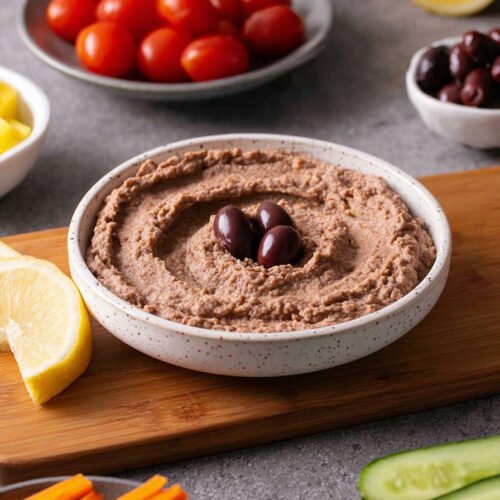
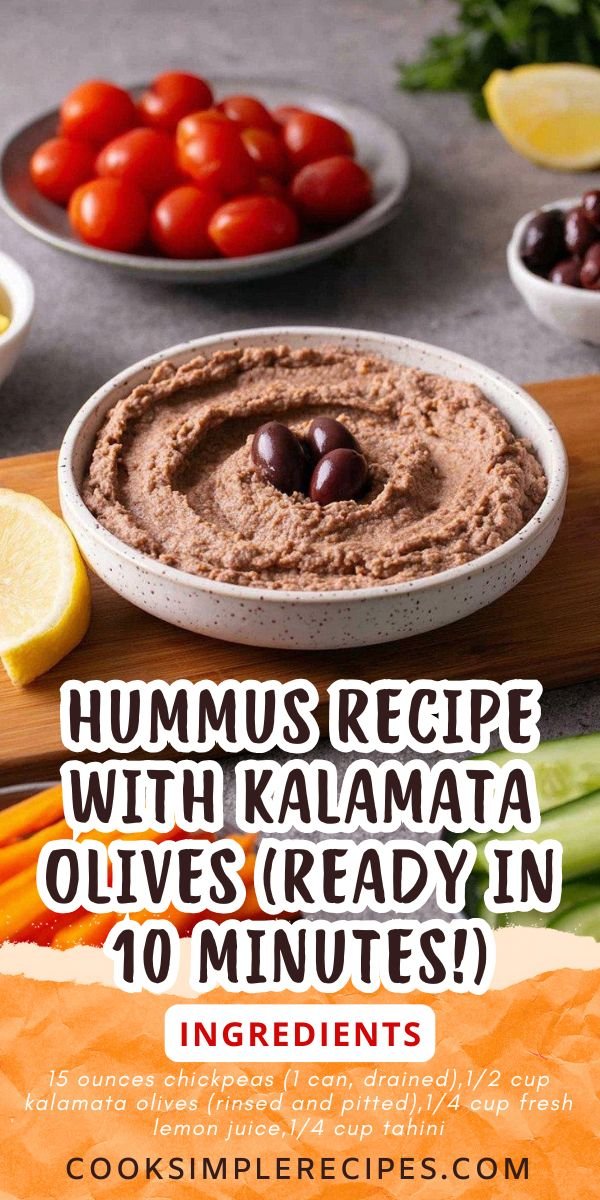
Hummus Recipe with Kalamata Olives (Ready in 10 Minutes!)
Ingredients
- 15 ounces chickpeas (1 can, drained)
- 1/2 cup kalamata olives (rinsed and pitted)
- 1/4 cup fresh lemon juice
- 1/4 cup tahini
- 2 cloves garlic (peeled)
- 1 teaspoon ground cumin
- 1/4 teaspoon sea salt
- Dash of black pepper
- 2 tablespoons extra virgin olive oil
- 2 more tablespoons olive oil (optional, for thinner consistency)
Instructions
- Toss all your ingredients into a food processor. Yep, everything at once. Chickpeas, olives, lemon juice, tahini, garlic, cumin, salt, pepper, and that olive oil.
- Blend it up until it’s smooth and creamy. This usually takes me about 1 to 2 minutes. Scrape down the sides if you need to.
- Taste it. Does it need more salt? More lemon? Adjust to your liking.
- Want it thinner? Add those extra 2 tablespoons of olive oil and give it another quick blend.
- Scoop it into a bowl and serve with whatever you’ve got. Veggies, crackers, pita bread, pretzel rods (my husband’s favorite), or just a spoon.
10) Nutrition
Serving Size: 4 ounces | Calories: 285 | Sugar: 4 g | Sodium: 337 mg | Fat: 16 g | Saturated Fat: 2 g | Carbohydrates: 27 g | Fiber: 7 g | Protein: 9 g | Cholesterol: 0 mg
Leave a Comment