1) What I Learned Testing Roasted Potatoes Carrots and Broccoli
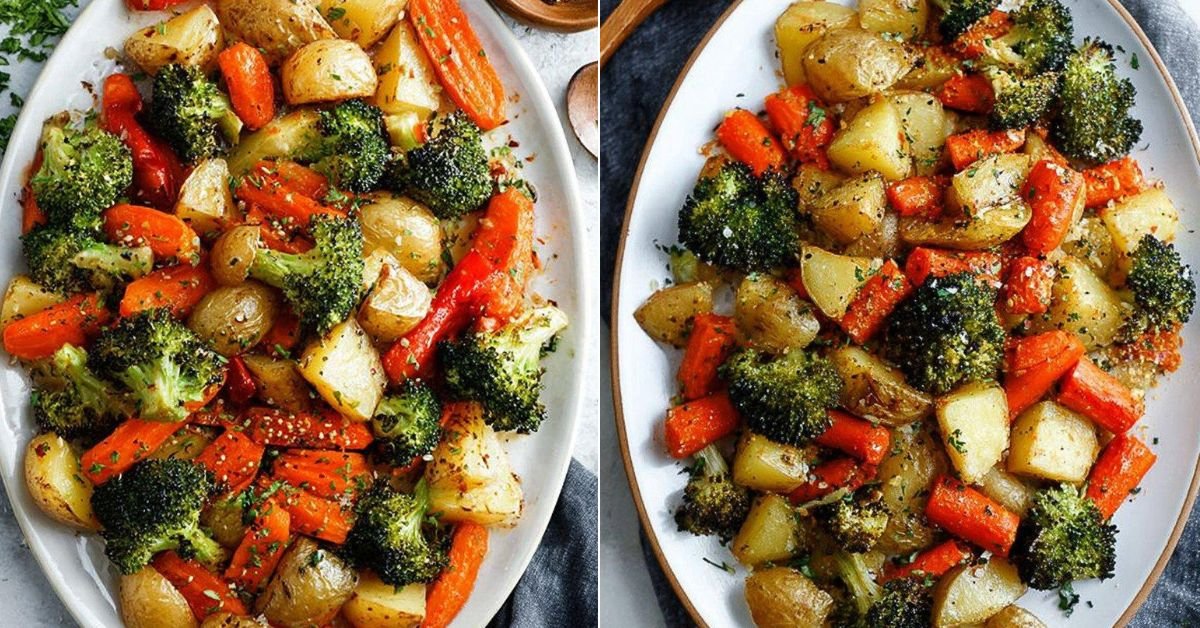
Uneven roasted vegetables can ruin a tray before dinner even starts: hard carrots, pale potatoes, and broccoli tips that burn too soon. I’m Lisa, and after a few frustrating pans, I tested the timing instead of roasting everything together. The discovery was simple but important: potatoes and carrots need a head start, while broccoli belongs near the end. That one adjustment gave me roasted broccoli and carrots with golden potatoes, sweet carrots, and crisp-tender broccoli. It brought the calm back to a family dinner side dish and turned garlic roasted vegetables into something dependable instead of a guessing game.
Table of Contents
- 1) What I Learned Testing Roasted Potatoes Carrots and Broccoli
- 2) Key Takeaways
- 3) Easy Roasted Potatoes Carrots and Broccoli Recipe
- 4) Why Most Roasted Potatoes Carrots and Broccoli Recipes Fail
- 5) Ingredients for Roasted Potatoes Carrots and Broccoli
- 6) How to Make Roasted Potatoes Carrots and Broccoli
- 7) Recipe Card: Roasted Potatoes Carrots and Broccoli
- 8) Tips for Making Roasted Potatoes Carrots and Broccoli
- 9) Common Mistakes & Fixes
- 10) How to Tell Roasted Potatoes Carrots and Broccoli Are Perfect
- 11) Professional Secrets Behind Better Roasted Potatoes Carrots and Broccoli
- 12) Best Dishes or Pairings to Serve With Roasted Potatoes Carrots and Broccoli
- 13) Making Roasted Potatoes Carrots and Broccoli Ahead of Time
- 14) Storing Leftover Roasted Potatoes Carrots and Broccoli
- 15) FAQ (Real Cooking Questions)
- 16) Save This Roasted Potatoes Carrots and Broccoli Recipe
- 17) Conclusion
- 18) Nutrition
2) Key Takeaways
- Do not roast every vegetable for the same amount of time: Potatoes and carrots are dense, so they need a head start before the broccoli goes on the pan.
- Use one large sheet pan: Crowding causes steam, which keeps the vegetables soft instead of giving them browned edges.
- Add lemon zest after roasting: Heat can dull citrus aroma, so adding zest at the end keeps the flavor bright and clean.
- Cut matters as much as seasoning: Small broccoli florets, 1-inch potatoes, and thick carrot slices help the tray finish evenly.
3) Easy Roasted Potatoes Carrots and Broccoli Recipe
This roasted potatoes carrots and broccoli recipe works because it respects how each vegetable cooks. Potatoes need enough time to soften inside and crisp lightly outside. Carrots need time for their natural sugars to concentrate. Broccoli cooks faster, so adding it later keeps the florets green, tender, and lightly crisp instead of dry and dark.
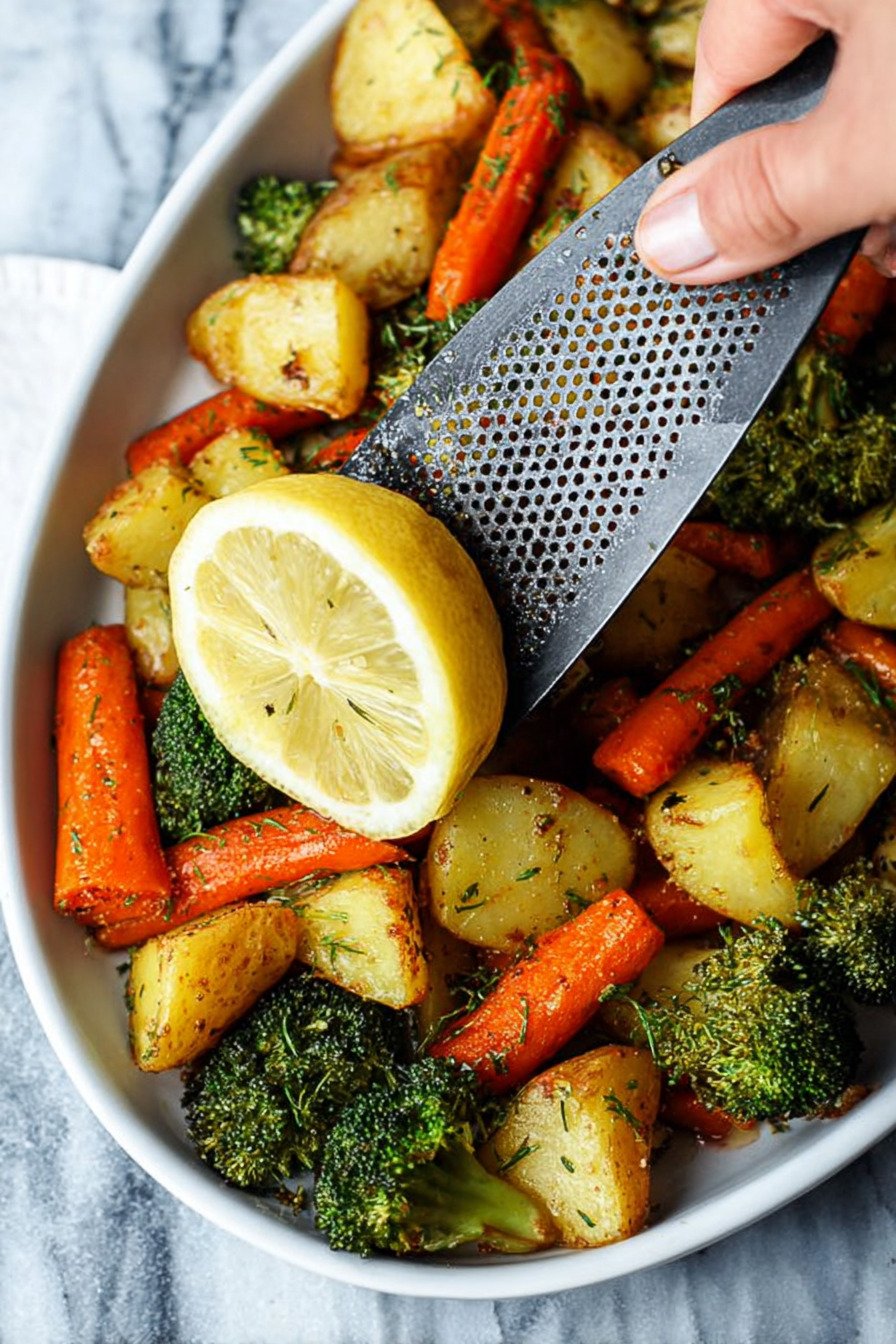
The seasoning is simple: olive oil, sea salt, garlic powder, rosemary, thyme, pepper, and lemon zest. Garlic powder is especially useful for roasted vegetables oven recipes because it coats evenly and does not burn as quickly as minced fresh garlic. The result is a tray of roasted broccoli and carrots with hearty potatoes, herb aroma, and a fresh finish that works with everyday dinners and holiday meals.
4) Why Most Roasted Potatoes Carrots and Broccoli Recipes Fail
Most failures come from timing and moisture, not from complicated ingredients. When broccoli roasts from the beginning, the tiny buds can dry out before the potatoes are tender. When the pan is crowded, moisture collects under the vegetables and prevents browning. When the potatoes are cut too large, they lag behind everything else. When the seasoning oil is not distributed well, some pieces taste flat while others taste too salty.
This method prevents those problems by roasting potatoes and carrots first, then adding broccoli later with the remaining seasoned oil. A single layer gives the vegetables direct contact with heat, which helps the edges brown. Stirring once during each roasting stage prevents one side from overcooking. The final lemon zest corrects the biggest flavor issue with healthy roasted vegetables: they can taste heavy if they do not get a bright finish.
5) Ingredients for Roasted Potatoes Carrots and Broccoli
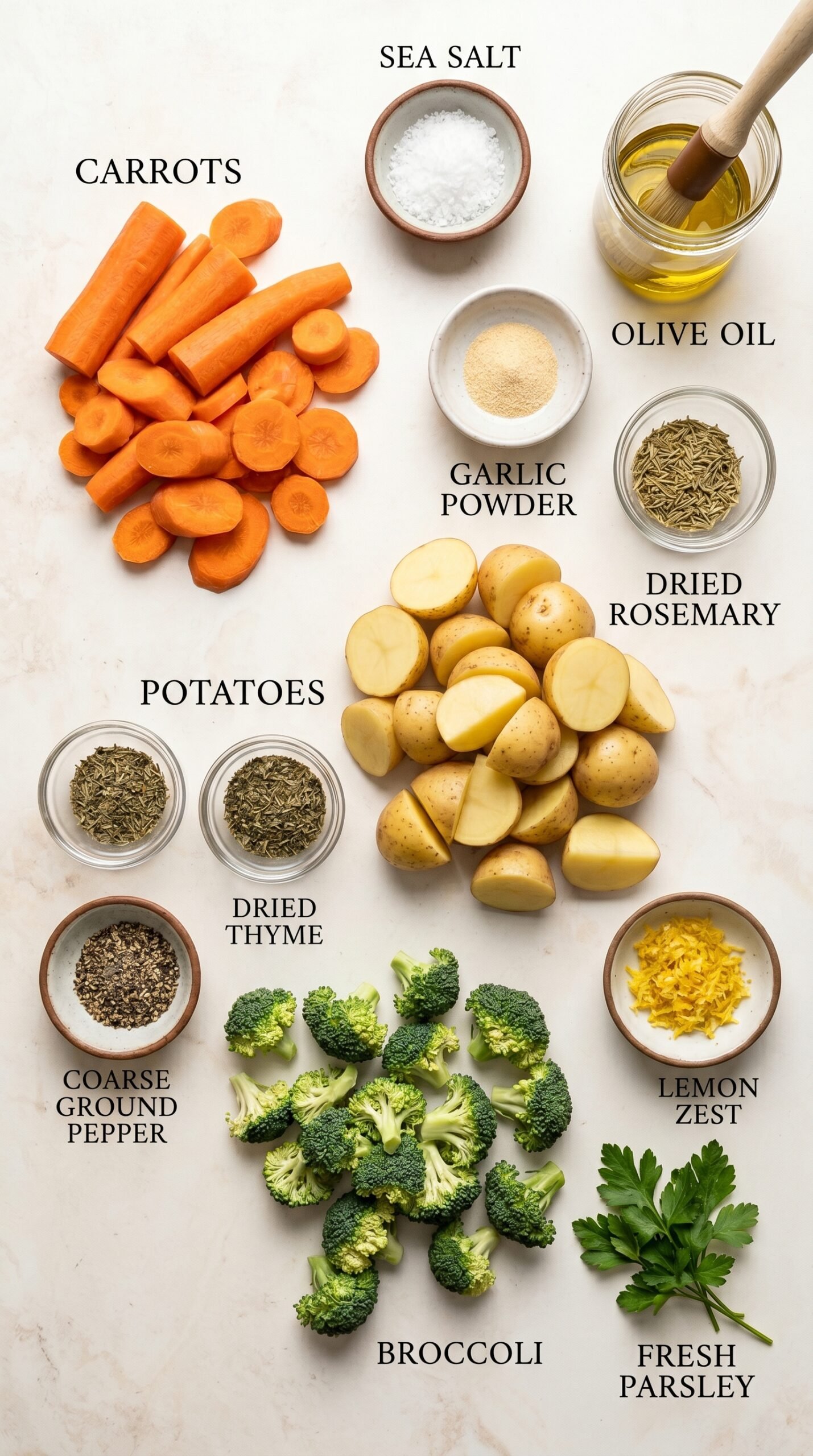
Carrots: Thick 1 ½-inch slices hold their shape during roasting. If they are cut too thin, they can shrivel before the potatoes are done. Carrots bring sweetness and color, which balance the savory herbs.
New potatoes or small firm potatoes: These give the tray a hearty base. Halving or quartering them creates flat surfaces that brown better. If the pieces are too large, the outside may color before the center becomes fork tender.
Broccoli: Small florets cook quickly and catch seasoning well. Add the broccoli after the potatoes and carrots have started roasting so it stays crisp-tender instead of dry.
Olive oil: Oil carries the garlic powder, herbs, salt, and pepper across the vegetables. Without enough oil, the vegetables roast unevenly and can taste dry instead of rounded.
Sea salt: Salt seasons the vegetables and helps their natural flavor stand out. Add the measured amount before roasting, then adjust lightly at the end if needed.
Garlic powder: Garlic powder creates garlic roasted vegetables without the risk of little minced garlic pieces burning on the sheet pan. It is best stirred into the oil before coating the vegetables.
Dried rosemary and dried thyme: These herbs add a savory roasted aroma. Dried herbs work well here because they can handle oven heat and cling to the oil-coated vegetables.
Coarse ground pepper: Pepper adds mild heat and a sharper finish. Add more after roasting only if the vegetables taste too soft or sweet.
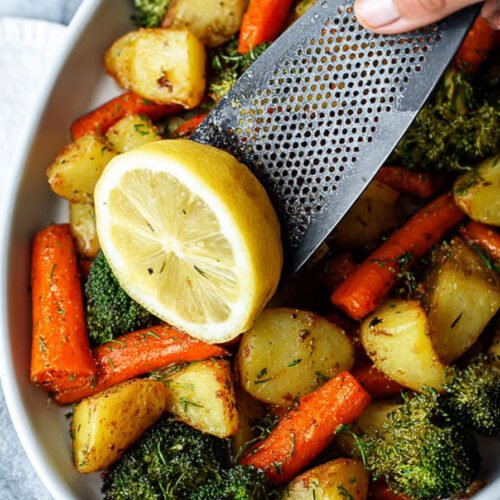
Lemon zest: Lemon zest goes on after roasting so the citrus oils stay fragrant. It brightens the potatoes, carrots, and broccoli without adding liquid that could soften the crisp edges.
Fresh thyme or parsley: This optional finishing herb adds freshness right before serving. Use it when the vegetables are going onto a platter or being served with a richer main dish.
- Small potatoes vs large potatoes: Small firm potatoes roast more evenly. Large potatoes can work, but they must be cut into similar 1-inch chunks.
- Garlic powder vs fresh garlic: Garlic powder gives even flavor and resists burning. Fresh garlic can become bitter if it sits on the pan too long.
- Broccoli added early vs later: Early broccoli can scorch. Later broccoli stays brighter and tender while the potatoes and carrots finish.
- Lemon zest vs lemon juice: Zest adds aroma without extra moisture. Juice can be used at the table, but too much on the hot pan may soften the vegetables.
6) How to Make Roasted Potatoes Carrots and Broccoli
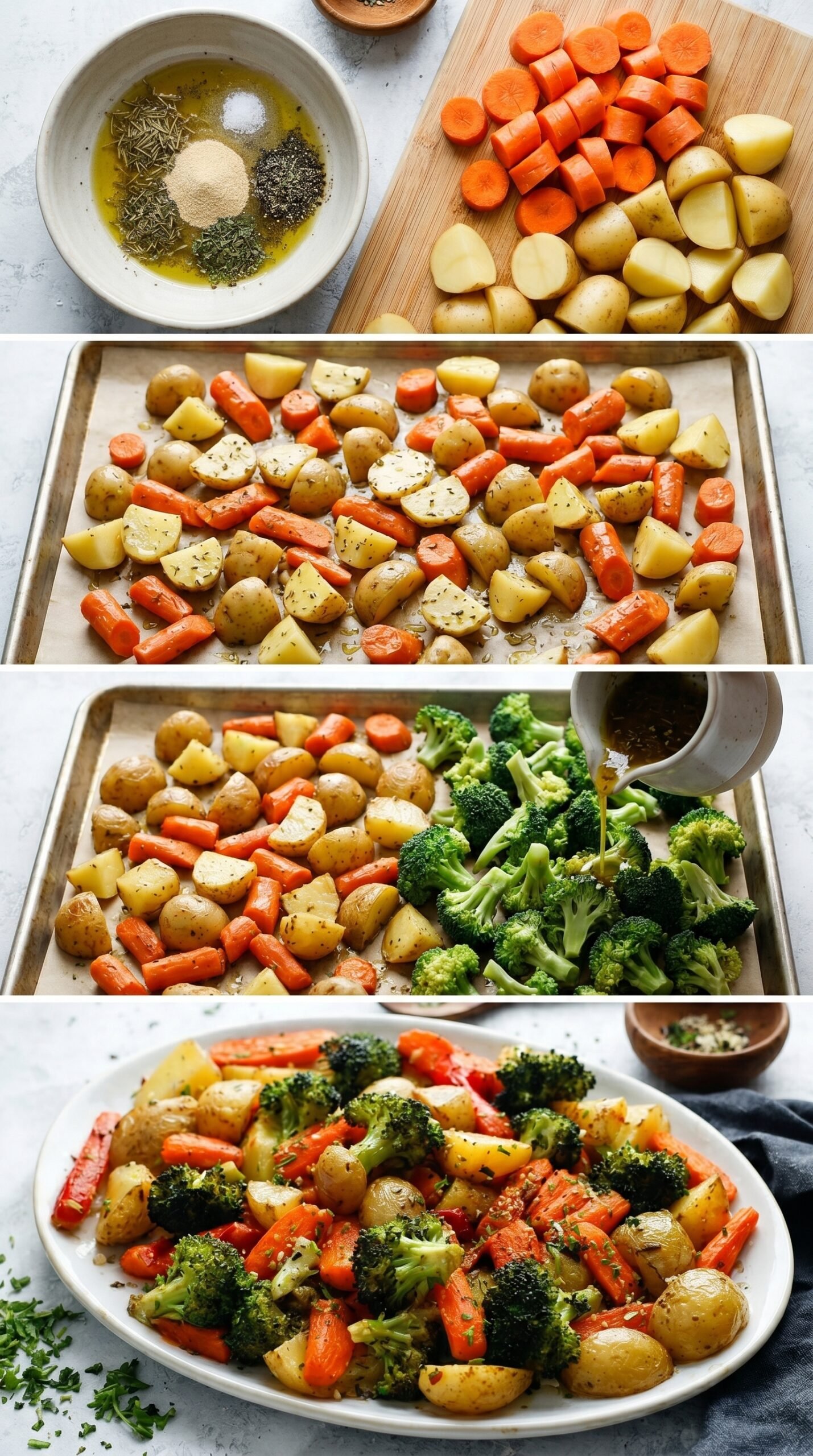
Step 1: Heat the oven to 400°F and prepare a large baking sheet with parchment paper or a light coating of oil. Starting with a hot oven helps the potatoes and carrots roast rather than slowly steam.
Step 2: Stir the olive oil, sea salt, garlic powder, rosemary, thyme, and pepper in a small bowl. Mixing the seasoning before it touches the vegetables prevents pockets of plain oil or concentrated salt.
Step 3: Cut the potatoes into large 1-inch chunks and slice the carrots into thick pieces. Keep the cuts consistent so the tray cooks evenly.
Step 4: Coat the potatoes and carrots with about two-thirds of the seasoned oil, then spread them in a single layer. Roast until they begin to soften and show light golden edges, stirring once so the browning is even.
Step 5: Add the broccoli with the remaining seasoned oil after the potatoes and carrots have had their head start. Spread everything out again and continue roasting until the broccoli is tender, the potato edges are golden, and the carrots are fork tender.
Step 6: Finish with lemon zest, taste for salt and pepper, and serve while hot. The vegetables should smell herbal, savory, and lightly citrusy.
7) Recipe Card: Roasted Potatoes Carrots and Broccoli
Roasted Potatoes Carrots and Broccoli with Lemon and Herbs
Ingredients
- 1 ½ lbs (700g) carrots, peeled and cut into 1 ½ inch slices so they roast tender without drying out
- 2 lbs (900g) new potatoes or small firm potatoes, scrubbed or peeled then sliced in half or quarters for even browning
- 1 head of broccoli, cut into small florets so it cooks quickly after the potatoes and carrots have started roasting
- 4 tablespoon olive oil to coat the vegetables and help the edges brown
- 1 teaspoon sea salt, plus more to taste after roasting
- ½ teaspoon garlic powder for an even savory coating that will not burn as easily as fresh garlic
- ½ teaspoon dried rosemary for a woodsy roasted flavor
- ½ teaspoon dried thyme to add earthy herb notes
- ¼ teaspoon course ground pepper for gentle heat and aroma
- zest of 1 small lemon to brighten the vegetables after roasting
- chopped fresh thyme or parsley for serving (optional), added at the end for freshness
Instructions
- Preheat the oven to 400°F (200C). Line a large baking sheet with parchment paper or lightly brush it with oil so the vegetables release easily and the edges can brown.
- Stir together the olive oil, sea salt, garlic powder, dried rosemary, dried thyme, and coarse ground pepper in a small bowl. Set it aside so the seasoning is ready before the vegetables go on the hot tray.
- Peel or scrub the potatoes, then slice them in half or quarters into large chunks, about 1 inch. Cut the carrots into about 1 ½ inch slices so both vegetables roast at a similar pace.
- Place the potatoes and carrots on the prepared baking sheet and pour over ⅔ of the oil and spice mixture. Stir well until evenly coated, then spread everything in a single layer with space between pieces so they roast instead of steaming.
- Bake the potatoes and carrots for 20-30 minutes, stirring once during baking. They should be starting to soften and show light golden edges before the broccoli is added.
- While the potatoes and carrots roast, cut the broccoli into small florets. Push the potatoes and carrots to one side of the baking sheet, add the broccoli, and pour the remaining ⅓ of the oil and spice mixture over it. Stir until coated, then spread all the vegetables back into a single layer.
- Bake for an additional 10 minutes, stirring once, until the broccoli is tender with lightly crisp tips and the potatoes and carrots are fork tender, golden, and crisp on the outside.
- Toss the roasted vegetables with the lemon zest, then season with more salt and pepper to taste. Transfer to a serving bowl or platter, top with fresh thyme or parsley if using, and serve immediately while hot.
8) Tips for Making Roasted Potatoes Carrots and Broccoli
Use the widest baking sheet you have because space is the difference between browning and steaming. If your sheet pan is small, divide the vegetables between two pans and rotate them halfway through cooking. The vegetables should sit in a single layer with a little room between pieces.
Cut the potatoes smaller than the carrots because potatoes are denser and need direct heat to soften through the center. Broccoli should be cut into small florets, but not shaved into tiny crumbs. Very small broccoli pieces can burn before they become pleasantly crisp.
Do not skip the staged oil mixture. Using two-thirds for the potatoes and carrots and saving one-third for the broccoli gives every vegetable its own coating. That is one reason this roasted broccoli and carrots recipe tastes seasoned throughout instead of only on the surface.
Add lemon zest after roasting, not before. Citrus zest contains fragrant oils that taste fresher when they are not baked for a long time. This final step makes the vegetables taste brighter without turning the pan wet.
9) Common Mistakes & Fixes
Problem: The broccoli burns before the potatoes are done. Cause: Broccoli cooks faster than potatoes and carrots. Fix: Roast the potatoes and carrots first, then add the broccoli for the final stretch.
Problem: The vegetables turn soft instead of browned. Cause: The pan is crowded, which traps steam. Fix: Use a larger sheet pan, spread everything in one layer, or divide the batch between two pans.
Problem: The potatoes are still firm in the center. Cause: The pieces were cut too large or unevenly. Fix: Cut potatoes into similar 1-inch chunks and check for fork tenderness before serving.
Problem: The vegetables taste flat. Cause: Salt was not adjusted after roasting, or the lemon zest was skipped. Fix: Taste at the end and add a small pinch of salt, pepper, and the lemon zest while the vegetables are hot.
Problem: The herbs taste dusty or harsh. Cause: Dried herbs can clump if sprinkled unevenly. Fix: Stir them into the olive oil first so they hydrate slightly and coat the vegetables more evenly.
10) How to Tell Roasted Potatoes Carrots and Broccoli Are Perfect
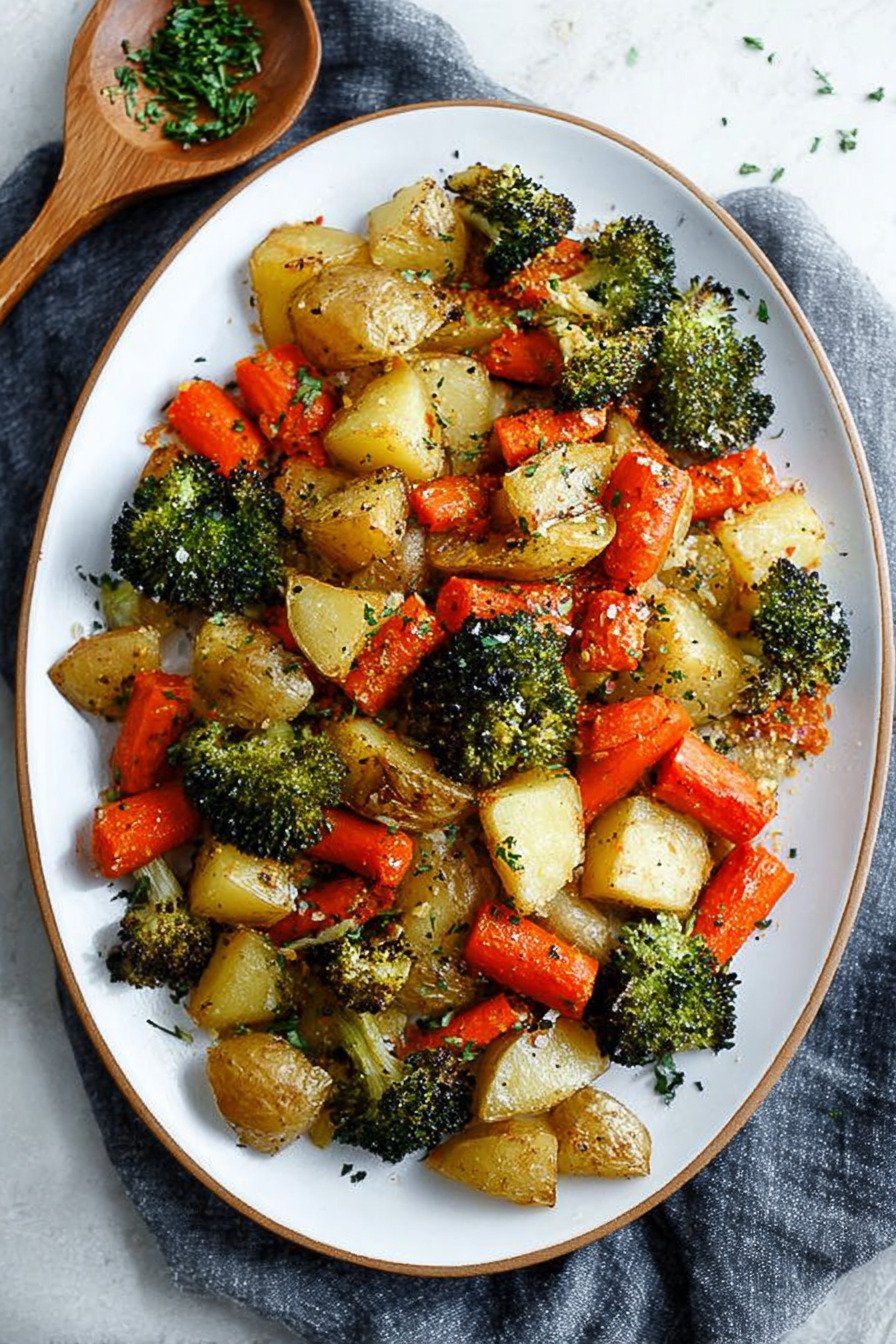
The potatoes should be fork tender in the center with lightly crisp, golden edges. The carrots should look glossy and slightly caramelized, not shriveled or hard. The broccoli should be bright green in the thicker parts with a few browned tips, but it should not smell burnt or sulfurous.
When you stir the pan, the vegetables should move easily without leaving watery pools behind. A good tray of roasted broccoli and carrots smells savory from the garlic and herbs, sweet from the carrots, and fresh once the lemon zest hits the hot vegetables. If the broccoli looks gray, the pan was likely too crowded or it cooked too long.
11) Professional Secrets Behind Better Roasted Potatoes Carrots and Broccoli
The first professional habit is sequencing. Not every ingredient deserves the same oven time, even when everything is going on one sheet pan. Dense vegetables go first; delicate vegetables go later. That simple timing choice protects color, texture, and flavor.
The second habit is seasoning the oil instead of sprinkling dry spices directly over the pan. Oil helps carry flavor into the small crevices of broccoli and across the cut surfaces of potatoes and carrots. It also helps the herbs bloom slightly so they taste integrated rather than raw.
The third habit is finishing with aroma. Lemon zest and fresh herbs do not need long heat. They work best at the end, when their fragrance can lift the roasted vegetables without competing with the rosemary, thyme, and garlic.
12) Best Dishes or Pairings to Serve With Roasted Potatoes Carrots and Broccoli
These vegetables work well beside roast chicken, baked salmon, turkey, grilled steak, or a simple omelet. The potatoes make the side dish filling, while the broccoli and carrots keep the plate colorful and balanced.
For a vegetarian meal, serve the vegetables over quinoa, rice, lentils, or white beans with a spoonful of yogurt sauce or tahini dressing. For a holiday table, place them on a warm platter and finish with extra parsley so the colors stay lively next to richer dishes.
13) Making Roasted Potatoes Carrots and Broccoli Ahead of Time
You can cut the carrots and potatoes a few hours ahead. Keep the potatoes covered with cold water if prepping well in advance, then drain and dry them thoroughly before roasting. Moisture on the surface blocks browning, so patting them dry matters.
Broccoli is best cut closer to cooking because the florets dry out faster once chopped. You can also mix the seasoned oil ahead and keep it covered at room temperature for a short time. Roast the vegetables close to serving for the best crisp edges, then add the lemon zest at the very end.
14) Storing Leftover Roasted Potatoes Carrots and Broccoli
Store leftovers in an airtight container in the refrigerator for up to 3 days. The vegetables will soften as they sit because roasted vegetables release moisture after cooling. For the best reheated texture, spread them on a baking sheet and warm at 375°F until hot.
A microwave works when speed matters, but it will not bring back crisp edges. Leftover broccoli and potatoes can be folded into breakfast hash, grain bowls, frittatas, or a warm lunch bowl with a simple dressing. Add a little fresh lemon zest or parsley after reheating to refresh the flavor.
15) FAQ (Real Cooking Questions)
Can I use frozen broccoli? Fresh broccoli gives the best texture because it roasts instead of releasing a lot of water. If using frozen broccoli, roast it from frozen on a separate hot pan and expect a softer result.
Can I make this roasted broccoli and carrots recipe without potatoes? Yes, but the timing will change. Carrots still need a head start, while broccoli should be added later. Without potatoes, the dish will be lighter and less hearty.
Why are my roasted vegetables soggy? The most common reasons are overcrowding, wet vegetables, or too low contact with the pan. Use a large baking sheet, dry the vegetables well, and spread them in a single layer.
Can I use fresh garlic instead of garlic powder? You can, but fresh garlic burns more easily. If using it, add it later with the broccoli or mix it with the lemon zest after roasting for a sharper garlic flavor.
Are these healthy roasted vegetables good for meal prep? Yes, they store well for a few days, but the texture is best when reheated in the oven. Keep the final lemon zest or fresh herbs for serving when possible.
16) Save This Roasted Potatoes Carrots and Broccoli Recipe
If this roasted potatoes carrots and broccoli recipe helped you solve uneven roasting, save it for weeknight dinners, holiday sides, or meal prep bowls. The key reminder is: give potatoes and carrots a head start, then add broccoli later for the best texture.
17) Conclusion
Good roasted vegetables are not about complicated ingredients; they are about timing, spacing, and finishing details. Once you understand why the potatoes and carrots need more time than the broccoli, the whole tray becomes easier to control. The vegetables come out tender, golden, aromatic, and bright instead of uneven or soggy. That is the difference between simply baking vegetables and building a side dish that feels intentional.

18) Nutrition
Serving Size 1 portion Calories 245 Sugar 8 g Sodium 430 mg Fat 10 g Saturated Fat 1 g Carbohydrates 38 g Fiber 7 g Protein 6 g Cholesterol 0 mg
Leave a Comment