
1) What I Learned Testing Crispy Roasted Cauliflower
Soft, pale cauliflower is usually not a seasoning problem; it is a moisture and spacing problem. I’m Lisa, and after a few batches that steamed instead of browned, I started testing floret size, oil coverage, oven heat, and pan spacing until I found the method that finally made crispy roasted cauliflower worth serving at Sunday dinner. The discovery was simple but important: dry florets, enough olive oil, and real space on the pan create the golden edges. This crispy oven roasted cauliflower has the savory garlic-paprika flavor and roasted cauliflower crispy texture I want from a dependable vegetable side.
Table of Contents
- 1) What I Learned Testing Crispy Roasted Cauliflower
- 2) Key Takeaways
- 3) Easy Crispy Roasted Cauliflower Recipe
- 4) Why Most Crispy Roasted Cauliflower Recipes Fail
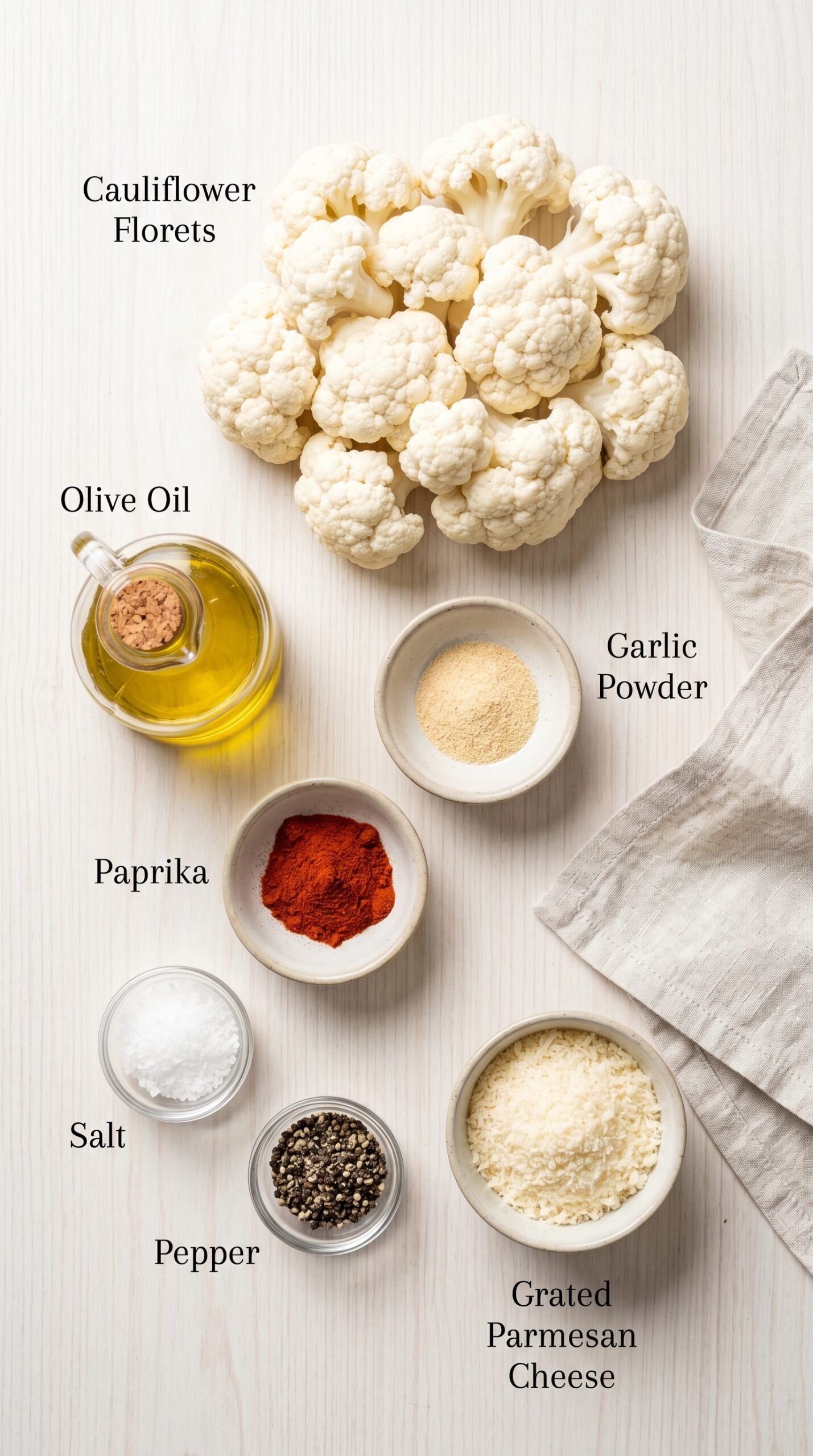
- 5) Ingredients for Crispy Roasted Cauliflower
- 6) How to Make Crispy Roasted Cauliflower
- 7) Recipe Card: Crispy Roasted Cauliflower
- 8) Tips for Making Crispy Roasted Cauliflower
- 9) Common Mistakes & Fixes
- 10) How to Tell Crispy Roasted Cauliflower Is Done
- 11) Professional Secrets Behind Better Crispy Roasted Cauliflower
- 12) Best Dishes or Pairings to Serve With Crispy Roasted Cauliflower
- 13) Making Crispy Roasted Cauliflower Ahead of Time
- 14) Storing Leftover Crispy Roasted Cauliflower
- 15) FAQ (Real Cooking Questions)
- 16) Save This Crispy Roasted Cauliflower Recipe
- 17) Conclusion
- 18) Nutrition
2) Key Takeaways
- The crisp texture comes from dry cauliflower, a hot oven, and space between florets, not from adding extra ingredients.
- Cutting the florets into similar sizes helps the centers become tender before the tips overbrown.
- Olive oil must coat the cauliflower evenly because dry spots scorch while under-coated pieces stay pale.
- Parmesan is optional, but it works best near the end of roasting so it crisps without burning.
3) Easy Crispy Roasted Cauliflower Recipe
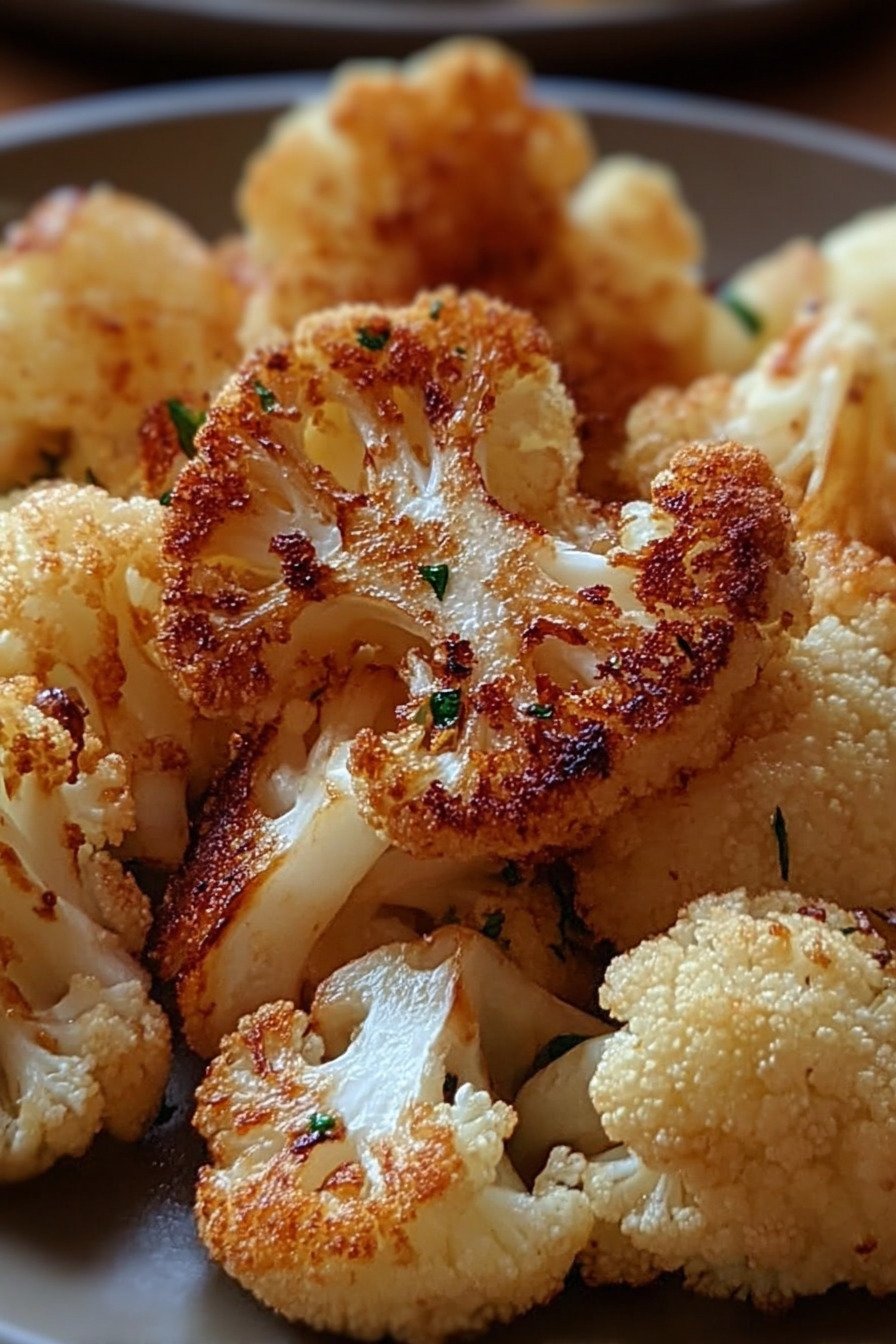
Crispy roasted cauliflower is a simple side dish, but it behaves like a high-moisture vegetable, not a dry roasted snack. Cauliflower releases steam as it cooks, so the goal is to give that moisture somewhere to escape while the edges make direct contact with the hot pan. The garlic powder and paprika cling to the lightly oiled surface, giving the cauliflower savory flavor and warm color. When the oven is hot enough and the florets are not crowded, the outside turns golden while the inside stays tender instead of collapsing into a soft, watery texture.
4) Why Most Crispy Roasted Cauliflower Recipes Fail
Most crispy roasted cauliflower recipes fail because the pan is too crowded. When florets touch each other, trapped steam softens the edges before they can brown. Another common issue is wet cauliflower; even a little rinse water can delay browning and create a limp surface. Uneven floret size also causes problems because tiny pieces burn while large pieces stay firm. Too little oil leaves seasoning dusty and dry, while too much oil can make the vegetables greasy instead of crisp. The fix is to dry the cauliflower, coat it evenly, roast at high heat, and spread the pieces in a single layer.
5) Ingredients for Crispy Roasted Cauliflower
Cauliflower: One head of cauliflower gives this recipe its structure. Cut it into florets before roasting so the flat sides can touch the pan. If the pieces are too large, the centers stay firm; if they are too tiny, the edges can char before the cauliflower becomes tender.
Olive oil: Olive oil helps seasoning stick and encourages browning. Use it before roasting, not after, so every floret has a light coating. If you use too little, the cauliflower can taste dry; if you use too much, the pan may feel oily.
Garlic powder: Garlic powder works well here because it coats the cauliflower evenly and is less likely to burn than fresh minced garlic at high heat. It gives the recipe a savory base without adding moisture.
Paprika: Paprika adds color and gentle warmth. It helps the cauliflower look more deeply roasted and gives the edges a subtle smoky-sweet note, especially when paired with the garlic powder.
Salt and pepper: Salt should go on before roasting so the cauliflower is seasoned from the start. Pepper adds a mild bite that balances the sweetness that develops as cauliflower browns.
Parmesan cheese: Parmesan is optional, but it adds salty, crisp flavor when used near the end of roasting. If added too early, it can overbrown before the cauliflower is fully tender.
- Small florets vs large florets: Smaller pieces brown faster, but similar sizing matters more than making them tiny.
- Garlic powder vs fresh garlic: Garlic powder is better for this high-heat method because it spreads evenly and resists burning.
- Light oil coating vs heavy oil coating: A light coating supports crisp edges; a heavy coating can make oven fried cauliflower feel greasy.
- Parmesan early vs parmesan late: Late parmesan gives a crisp salty finish without turning bitter.
6) How to Make Crispy Roasted Cauliflower
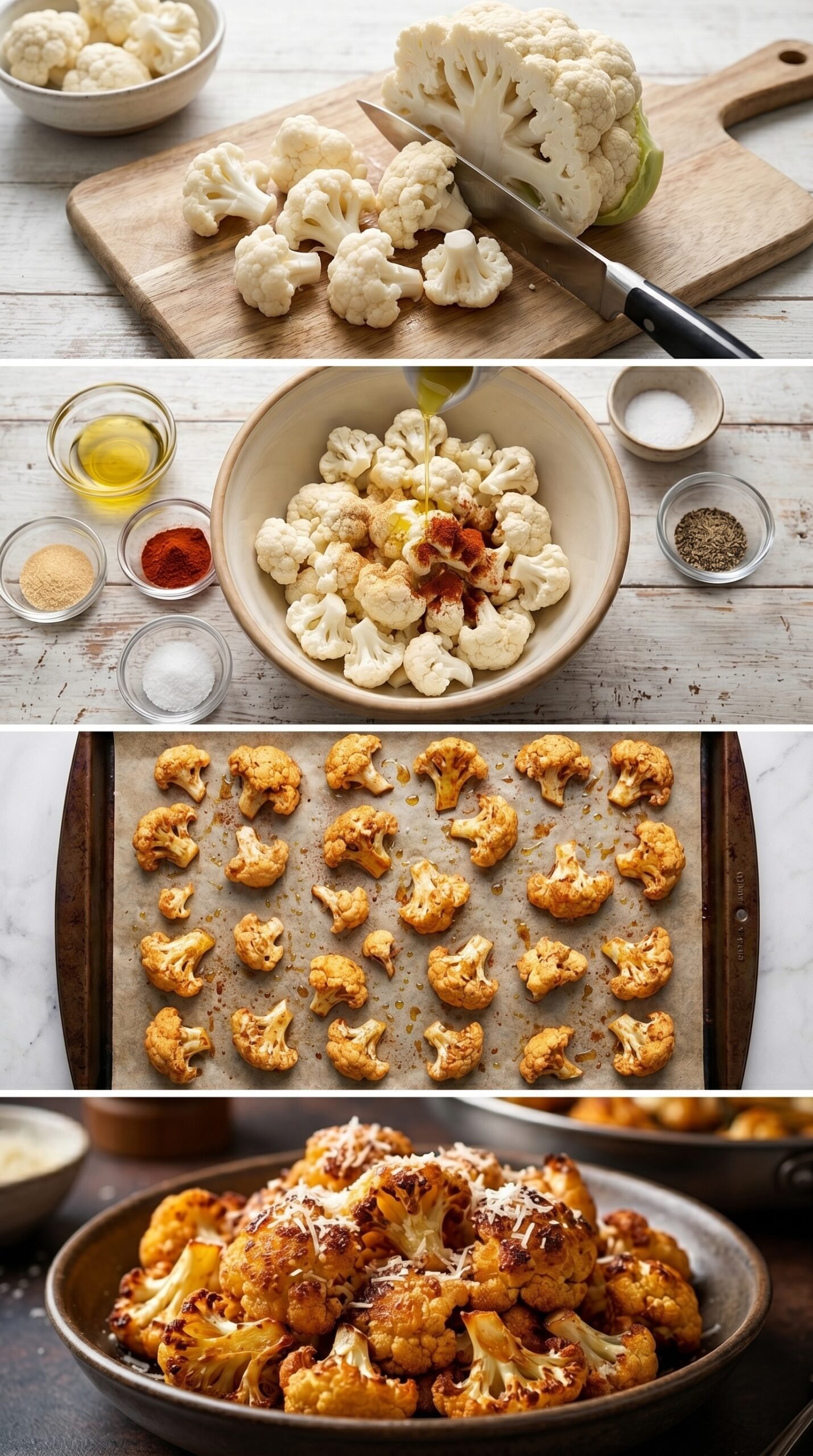
Step 1: Preheat the oven to a high roasting temperature so the cauliflower starts browning quickly. Cut the head into evenly sized florets and pat them dry, especially if they were rinsed.
Step 2: Toss the florets with olive oil, garlic powder, paprika, salt, and pepper. Look for a thin, even coating rather than dry patches or puddles of oil at the bottom of the bowl.
Step 3: Spread the cauliflower on a baking sheet in a single layer. Leave space between pieces and turn several cut sides down so the flat surfaces can brown against the pan.
Step 4: Roast until the edges are golden brown and the centers are tender. Flip once during roasting so more sides get heat contact, but avoid stirring too often because constant movement slows browning.
Step 5: Add parmesan near the end if using, then finish roasting until the cheese lightly crisps. Serve the cauliflower hot, when the edges are at their best.
7) Recipe Card: Crispy Roasted Cauliflower
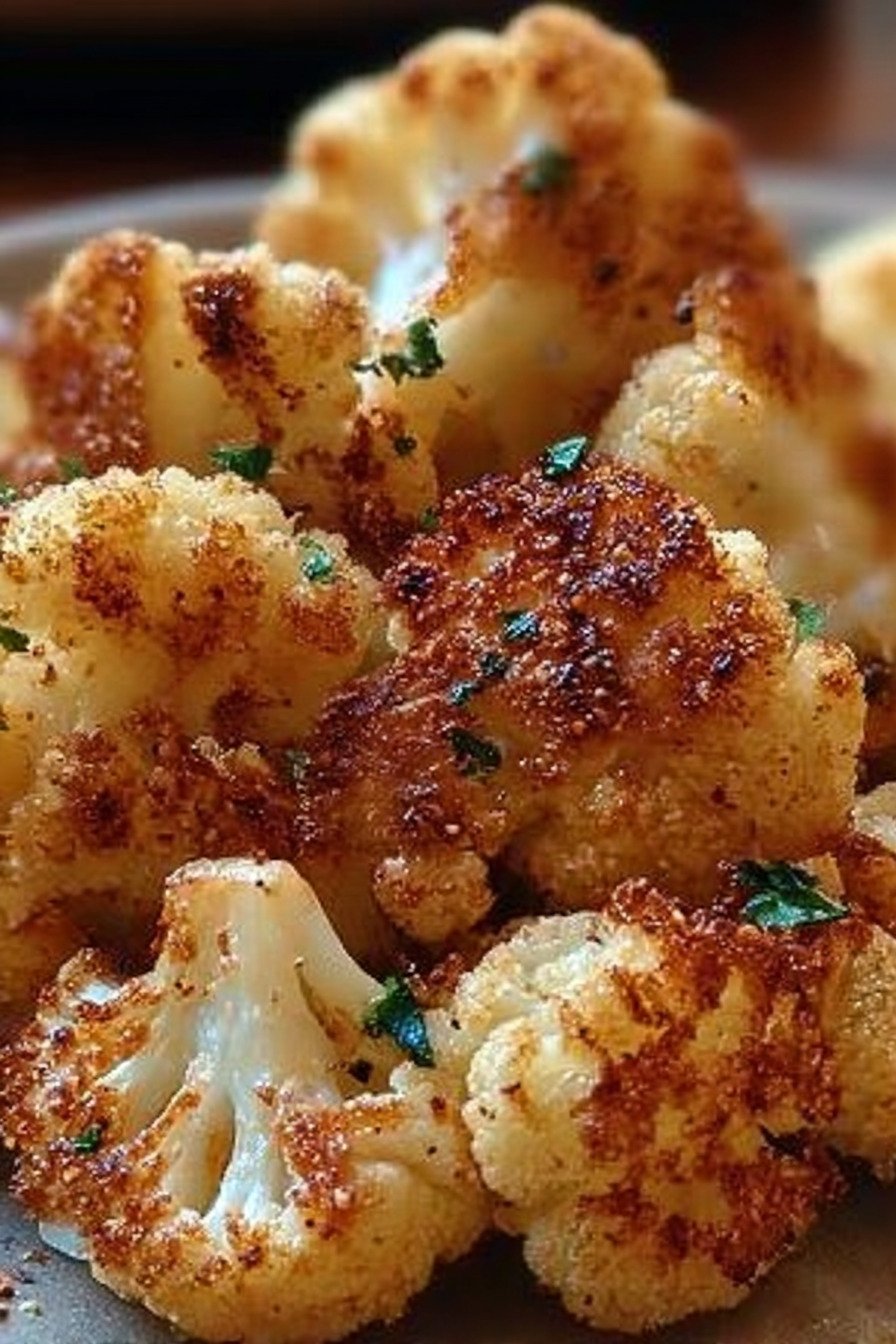
Crispy Roasted Cauliflower with Garlic, Paprika, and Parmesan
Ingredients
- 1 head of cauliflower cut into florets, kept similar in size so the pieces roast evenly
- 2 tablespoons olive oil, enough to lightly coat the florets and help the edges crisp
- 1 teaspoon garlic powder, for savory flavor that distributes evenly
- 1 teaspoon paprika, for color, warmth, and a lightly smoky note
- Salt and pepper to taste, added before roasting so the cauliflower is seasoned throughout
- 1/4 cup grated parmesan cheese optional, added for a salty, crisp finish
Instructions
- Preheat the oven to 425°F and place a large rimmed baking sheet inside for a few minutes if you want stronger browning. Cut the cauliflower into evenly sized florets and pat them dry so excess moisture does not steam the pieces.
- Add the cauliflower florets to a large bowl. Drizzle with olive oil, then sprinkle with garlic powder, paprika, salt, and pepper. Toss thoroughly until the oil and seasonings coat the flat sides, stems, and tiny edges.
- Spread the cauliflower in a single layer on the baking sheet, leaving space between pieces. Turn as many cut sides down as possible because direct pan contact is what creates the crispest golden surfaces.
- Roast for 22 to 28 minutes, flipping once halfway through, until the florets are tender in the center and deeply browned on the edges. If using parmesan, sprinkle it over the cauliflower during the last 5 minutes so it melts and crisps without burning.
- Serve hot while the edges are crisp. Add a light drizzle of balsamic glaze if desired, or serve alongside grilled chicken, fish, steak, quinoa, rice, or a fresh green salad.
- Cool leftovers completely before storing in an airtight container in the refrigerator for 3 to 4 days. Reheat on a baking sheet at 350°F for 10 to 15 minutes to bring back some crispness; freezing is not recommended because thawed cauliflower loses its roasted texture.
8) Tips for Making Crispy Roasted Cauliflower
The most important tip for crispy roasted cauliflower is to treat moisture as the enemy of browning. After washing cauliflower, dry it well with a towel and give the florets a few minutes to air-dry if needed. Use a large baking sheet so steam can escape, and avoid piling the vegetables into a small pan. For stronger color, place more flat cut sides against the pan. If you want a deeper seasoning profile, cumin or curry powder can be used as an optional variation, but the main method should stay focused on oil coverage, even sizing, and high-heat roasting.
9) Common Mistakes & Fixes
Problem: The cauliflower turns soft instead of crisp. Cause: The pan is crowded or the florets were too wet. Fix: Dry the cauliflower well and spread it in a single layer with space between pieces.
Problem: The seasoning tastes uneven. Cause: The oil and spices were not tossed thoroughly. Fix: Use a large bowl and toss until the garlic powder, paprika, salt, and pepper cling to most surfaces.
Problem: The cauliflower burns at the tips but stays firm inside. Cause: The florets are too uneven in size. Fix: Trim large florets down and keep the pieces similar so they cook at the same pace.
Problem: Parmesan tastes bitter. Cause: The cheese was added too early. Fix: Add parmesan during the final minutes of roasting so it melts and crisps without scorching.
10) How to Tell Crispy Roasted Cauliflower Is Done
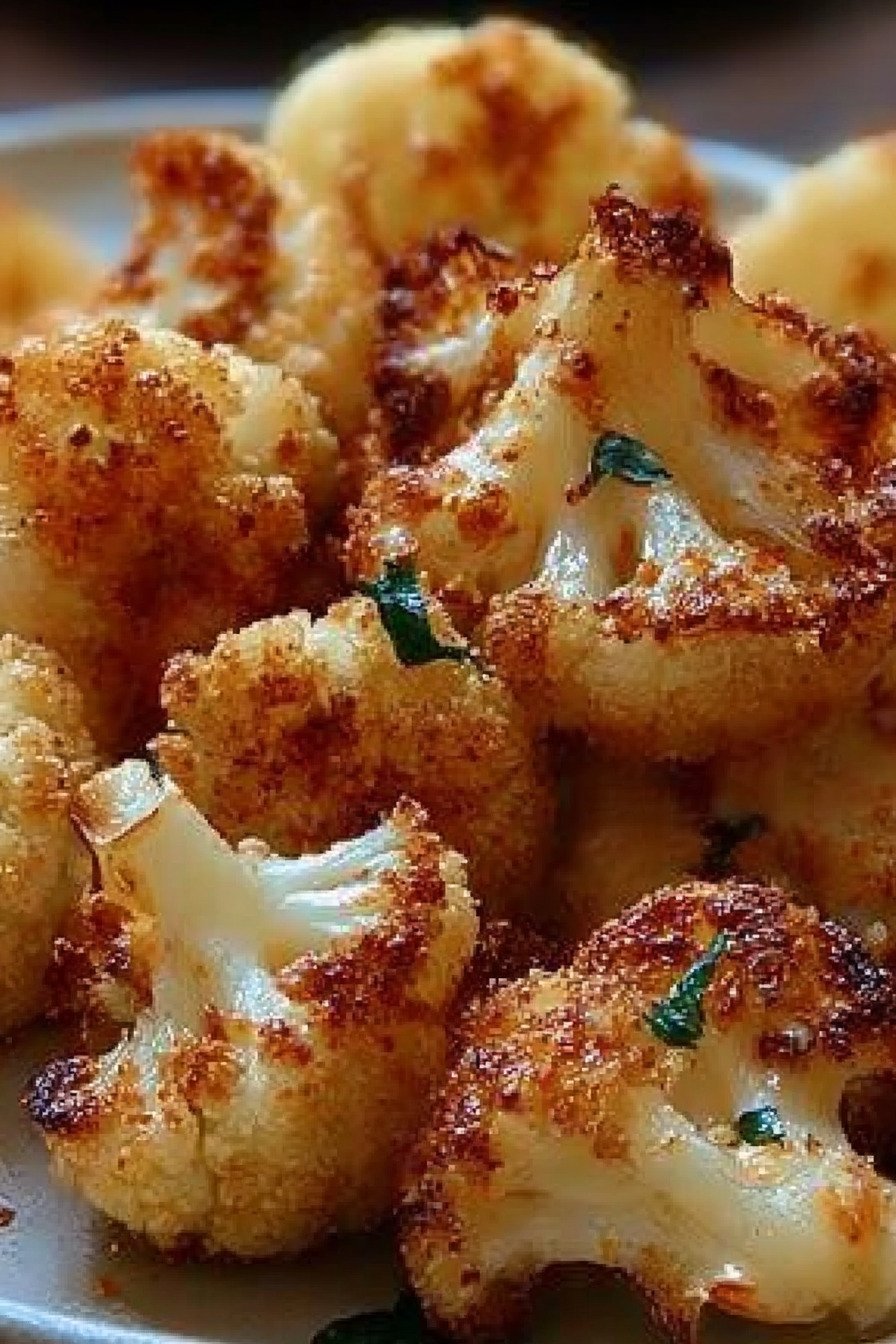
Crispy roasted cauliflower is done when the edges are golden brown, the small tips have a little darker color, and the stems are tender when pierced. The surface should look roasted, not wet, and the pieces should hold their shape when lifted from the pan. The aroma should be savory and lightly nutty from the roasted cauliflower and paprika. A failure sign is pale cauliflower with moisture pooling on the pan, which usually means the pieces steamed. Another warning sign is blackened tips with hard centers, which points to uneven floret size or oven heat that was too aggressive for the cut.
11) Professional Secrets Behind Better Crispy Roasted Cauliflower
The professional-style secret is pan contact. Restaurants often get better roasted vegetables because they avoid crowding and use enough heat to brown the surface quickly. At home, the same idea applies: use a wide pan, spread the cauliflower out, and let the cut sides sit still long enough to caramelize. Do not keep stirring every few minutes. Letting the cauliflower rest against the hot metal creates the golden patches that make crispy cauliflower recipes taste more developed. A final light seasoning adjustment after roasting also matters because heat can soften the perception of salt.
12) Best Dishes or Pairings to Serve With Crispy Roasted Cauliflower
Crispy roasted cauliflower works well beside grilled chicken because the roasted edges add texture to a lean protein. It also pairs nicely with fish, steak, quinoa, rice, or a fresh green salad. For a sharper contrast, a small drizzle of balsamic glaze adds sweetness and acidity against the savory garlic and paprika. In grain bowls, use the cauliflower while it is still warm so the crisp edges stand out against softer ingredients. It can also sit beside other roasted vegetables, but give each vegetable enough pan space if you roast them together.
13) Making Crispy Roasted Cauliflower Ahead of Time
Crispy roasted cauliflower is best right after roasting, but you can do some prep ahead. Cut the cauliflower into florets, dry it well, and store it in the refrigerator in a covered container lined with a paper towel. Wait to add the olive oil and seasonings until just before roasting because salted cauliflower can release moisture as it sits. If you need to cook it shortly before dinner, roast it until nearly done, then return it to a hot oven for a few minutes before serving to refresh the edges.
14) Storing Leftover Crispy Roasted Cauliflower
Store leftover crispy roasted cauliflower in an airtight container in the refrigerator for 3 to 4 days. Let it cool first so trapped steam does not soften it further inside the container. Reheat it in the oven at 350°F for about 10 to 15 minutes, spreading the pieces out on a baking sheet instead of stacking them. The microwave warms cauliflower quickly but usually makes the texture softer. Freezing is not recommended because thawed cauliflower releases too much moisture and loses the roasted texture that makes this recipe work.
15) FAQ (Real Cooking Questions)
Why is my roasted cauliflower not crispy? The most common reasons are wet florets, a crowded pan, or too little oven heat. Dry the cauliflower, use enough oil to coat it lightly, and spread it in one layer.
Can I make crispy oven roasted cauliflower without parmesan? Yes. Parmesan is optional. The cauliflower can still brown well with olive oil, garlic powder, paprika, salt, and pepper.
How do I keep roasted cauliflower crispy after cooking? Serve it soon after roasting and avoid covering it tightly while hot. Covering traps steam, which softens the edges.
Can I use frozen cauliflower? Fresh cauliflower gives the best texture. Frozen cauliflower holds more moisture, so it is harder to get roasted cauliflower crispy without extra drying and high heat.
Can I change the seasoning? Yes, cumin or curry powder can be added as optional variations. Keep the oil, spacing, and roasting method the same because those control the texture.
16) Save This Crispy Roasted Cauliflower Recipe
If this Crispy Roasted Cauliflower helped you solve the problem of soft, steamed cauliflower, save it for your next dinner side. The key reminder is: dry the florets, space them out, and let the hot pan create the golden edges.
17) Conclusion
Crispy roasted cauliflower becomes much more reliable when you understand what causes the usual failure. The recipe is not about adding more ingredients; it is about controlling moisture, using enough oil, cutting the florets evenly, and giving the pan space to do its job. Once you see the difference between steamed cauliflower and properly browned cauliflower, the method becomes easy to repeat. You get tender centers, crisp golden edges, and a savory garlic-paprika flavor that can support anything from a simple weeknight plate to a fuller dinner spread.
18) Nutrition
Serving Size 1 portion Calories 118 Sugar 3 g Sodium 225 mg Fat 8 g Saturated Fat 2 g Carbohydrates 9 g Fiber 4 g Protein 5 g Cholesterol 5 mg
Leave a Comment