
1) My Tested Method for Grilled Chicken Thighs Recipe
Dry chicken thighs usually happen because the grill is too hot, the marinade is too sugary, or the meat gets sliced before it rests. I’m Lisa, and I learned this after a few batches that looked nicely charred but tasted tougher than I wanted. Once I tested a balanced marinade, steadier medium-high heat, and a short rest, the grilled boneless chicken thighs finally stayed juicy. This method gives the flavor of marinated grilled chicken thigh recipes without making the prep feel complicated, and it brings that calm backyard dinner feeling when the chicken thighs on the grill come off smoky, tender, and ready to serve.
Table of Contents
- 1) My Tested Method for Grilled Chicken Thighs Recipe
- 2) Key Takeaways
- 3) Easy Grilled Chicken Thighs Recipe
- 4) Why Most Grilled Chicken Thighs Recipe Recipes Fail
- 5) Ingredients for Grilled Chicken Thighs Recipe
- 6) How to Make Grilled Chicken Thighs Recipe
- 7) Recipe Card: Grilled Chicken Thighs Recipe
- 8) Tips for Making Grilled Chicken Thighs Recipe
- 9) Common Mistakes & Fixes
- 10) How to Tell Grilled Chicken Thighs Are Perfect
- 11) Professional Secrets Behind Better Grilled Chicken Thighs Recipe
- 12) Best Dishes or Pairings to Serve With Grilled Chicken Thighs Recipe
- 13) Making Grilled Chicken Thighs Recipe Ahead of Time
- 14) Storing Leftover Grilled Chicken Thighs Recipe
- 15) FAQ (Real Cooking Questions)
- 16) Save This Grilled Chicken Thighs Recipe Recipe
- 17) Conclusion
- 18) Nutrition
2) Key Takeaways
- The biggest secret to juicy grilled boneless chicken thighs is controlled heat, not rushing over aggressive flames.
- A short marinade works, but overnight marinating gives deeper flavor when you want a stronger savory-garlic finish.
- Honey or brown sugar helps browning, but excess marinade on the surface can burn if the grill is too hot.
- Resting the chicken for 5 minutes keeps the juices inside instead of letting them run onto the cutting board.
3) Easy Grilled Chicken Thighs Recipe
This grilled chicken thighs recipe works because it treats chicken thighs like a forgiving but still temperature-sensitive cut. Thigh meat has more fat and connective tissue than chicken breast, so it can handle the grill well, but it still turns dry if it stays over direct heat too long. The marinade brings together oil for coating, soy sauce or lemon juice for seasoning, honey or brown sugar for browning, garlic for aroma, and smoked paprika for color. When those ingredients meet medium-high heat, the outside develops a light char while the center stays tender.
The goal is not to blacken the chicken quickly. The goal is to build color gradually while the inside reaches 165°F. This is why the recipe fits so well for chicken thigh recipes on the grill: it gives you clear checkpoints instead of guessing. You should hear a steady sizzle, smell garlic and paprika as they warm, and see the surface turn glossy, golden, and lightly charred before the chicken is ready to rest.

4) Why Most Grilled Chicken Thighs Recipe Recipes Fail
Most grilled chicken thighs fail because the grill is treated like a race. When the heat is too high, the honey or brown sugar in the marinade darkens before the center is cooked. That leaves the outside bitter and the inside underdone. Medium-high heat gives the sugars time to caramelize while the chicken cooks through.
Another common failure is skipping the marinade time. Even 30 minutes helps the garlic, salt, soy sauce, paprika, and sweetness cling to the surface. Overnight marinating gives deeper flavor, but the chicken should not go straight from an icy refrigerator to the grill. Letting it stand briefly at room temperature helps the thighs cook more evenly.
Flare-ups also ruin many marinated chicken thighs grill attempts. Too much wet marinade dripping onto hot grates can cause flames that scorch the chicken. Let the excess drip off before grilling, and move pieces to a cooler area if they darken too quickly. The final mistake is cutting immediately after grilling. Resting gives the juices time to settle, which makes the chicken taste fuller and more tender.
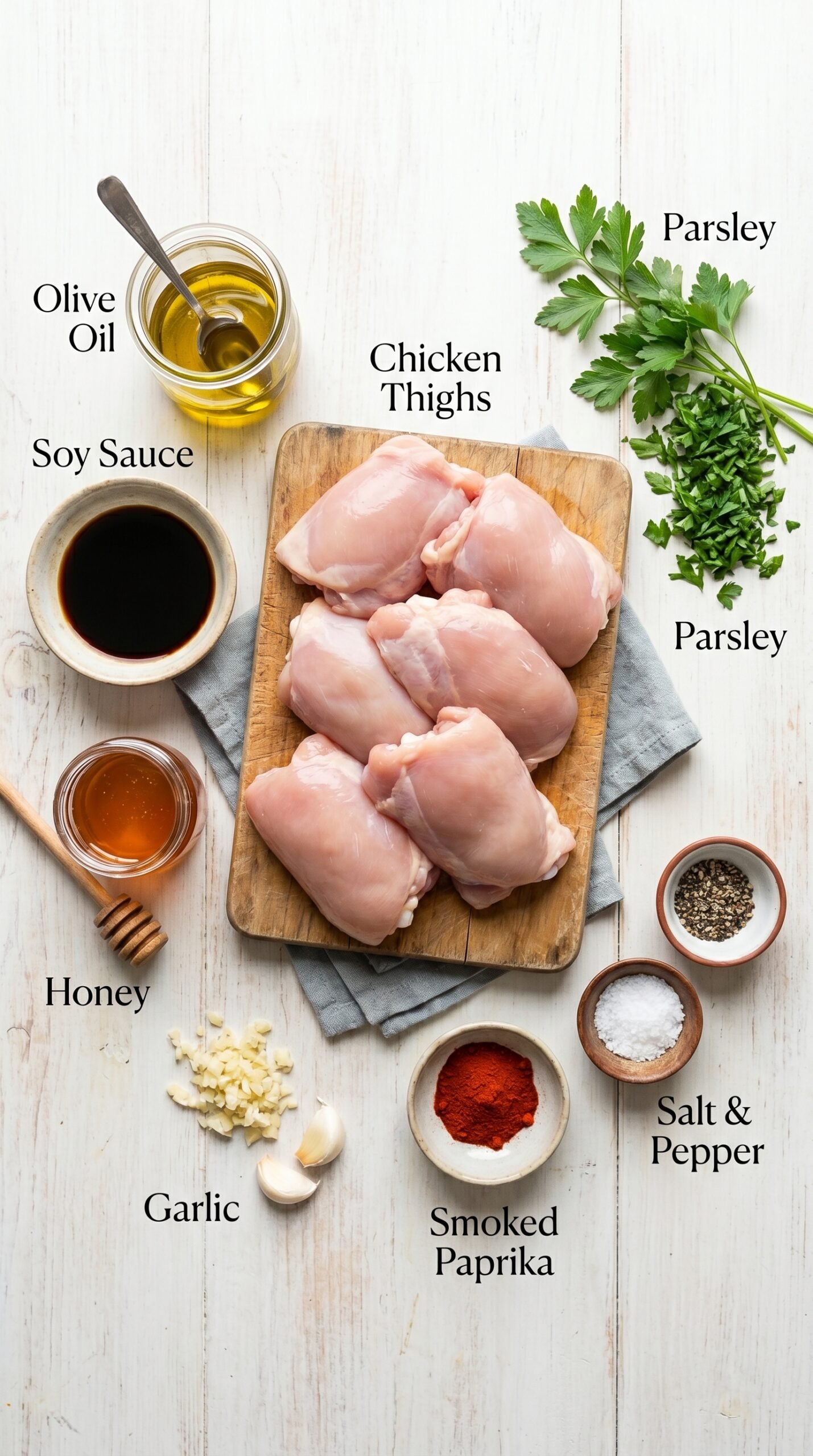
5) Ingredients for Grilled Chicken Thighs Recipe
Chicken thighs: Use 6–8 bone-in or boneless skinless chicken thighs. Boneless thighs cook faster and are easier for quick dinners, while bone-in thighs take a little longer but can taste richer. Trim loose excess fat so it does not drip heavily and cause flare-ups.
Olive oil: Olive oil helps the marinade coat the chicken evenly and encourages browning. It is especially useful when using skinless thighs because it helps the surface stay moist while the grill heat builds color.
Soy sauce or lemon juice: Soy sauce adds savory depth and saltiness, while lemon juice gives a brighter, tangier finish. Use soy sauce when you want a deeper grilled flavor, and use lemon juice when serving the chicken with lighter sides like salad or grilled vegetables.
Honey or brown sugar: This small amount of sweetness balances the salt and garlic while helping the surface caramelize. If you use too much, the chicken can burn quickly, so keep the amount measured.
Garlic: Minced garlic gives the marinade its main aroma. Finely mince it so it spreads evenly instead of clumping in one spot and burning.
Smoked paprika: Smoked paprika adds warm color and a subtle smoky flavor even before the chicken hits the grill. It works especially well for grilled boneless chicken thighs because it makes the surface look deeply seasoned.
Salt and pepper: Add these carefully, especially if using soy sauce. Salt brings the chicken flavor forward, while pepper adds a mild bite that keeps the marinade from tasting too sweet.
Parsley or cilantro: Fresh herbs are optional, but they brighten the finished chicken after grilling. Add them only at the end so they stay fresh instead of wilting over the heat.
- Boneless thighs vs bone-in thighs: Boneless thighs cook faster and are convenient for weeknight grilling; bone-in thighs need more time and should be checked carefully near the bone.
- Soy sauce vs lemon juice: Soy sauce creates a deeper savory marinade, while lemon juice gives a cleaner, brighter taste with less salt.
- Honey vs brown sugar: Honey gives a glossy finish, while brown sugar creates a slightly deeper caramel note; both need controlled heat to prevent burning.
- Medium-high heat vs high heat: Medium-high heat browns the outside without scorching the sugars too early, while very high heat can burn the marinade before the chicken is safe to eat.
6) How to Make Grilled Chicken Thighs Recipe
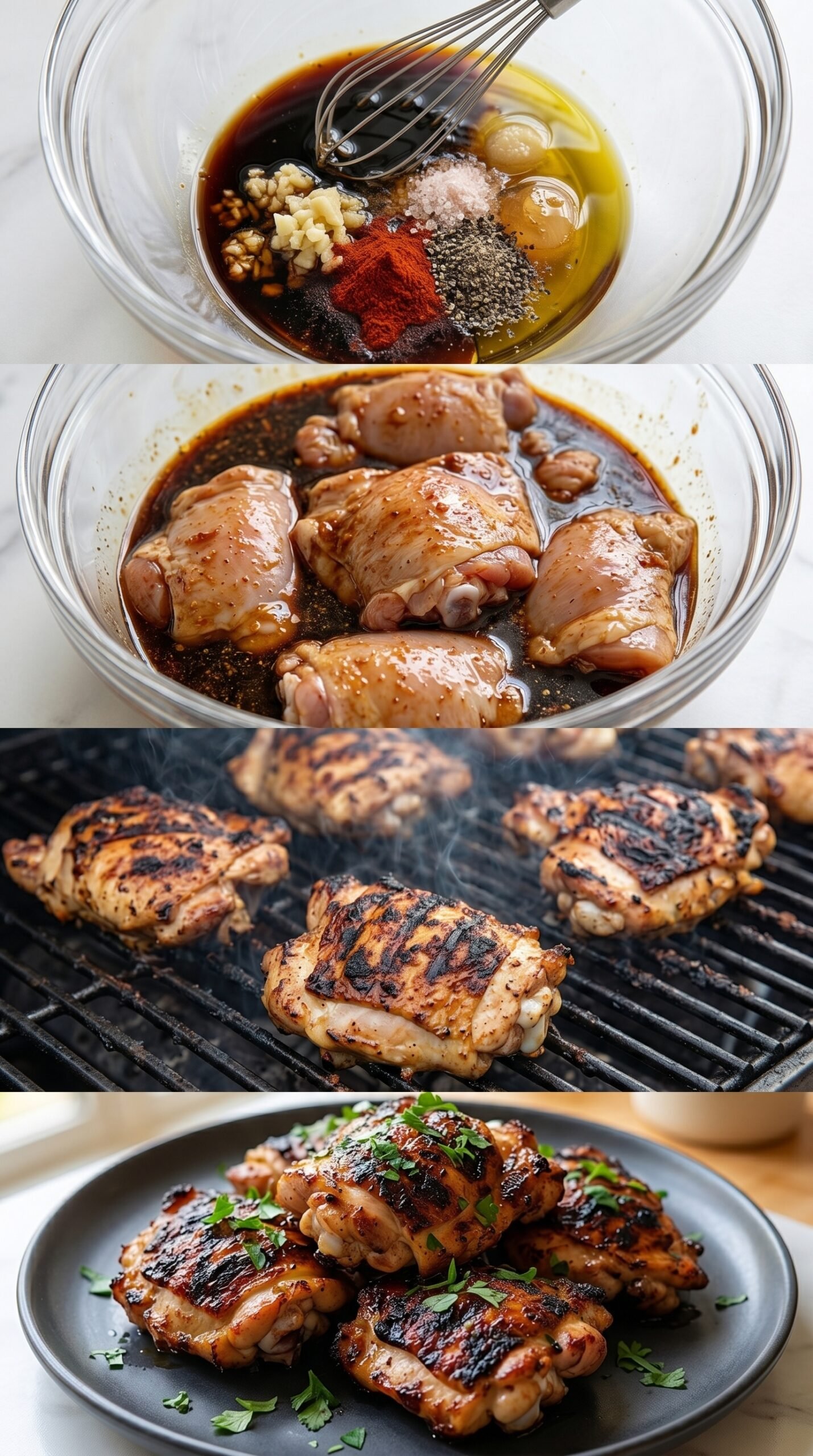
Step 1: Whisk the olive oil, soy sauce or lemon juice, honey or brown sugar, minced garlic, smoked paprika, salt, and pepper until the marinade looks smooth and glossy. Taste the marinade before adding chicken so you can adjust salt, sweetness, or acidity early.
Step 2: Place the chicken thighs in a large bowl or zip-top bag, pour the marinade over them, and turn each piece until coated. Let the chicken marinate for at least 30 minutes, or refrigerate it overnight for more developed flavor.
Step 3: Heat the grill to medium-high and lightly oil the grates. The chicken should sizzle when it touches the grill, but the flames should not jump up aggressively. If the grates are dry, the chicken is more likely to stick and tear.
Step 4: Grill the chicken thighs for about 6–8 minutes per side. If using skin-on thighs, start skin side down. Look for browned edges, light charring, and an internal temperature of 165°F in the thickest part.
Step 5: Remove the chicken from the grill and rest it for 5 minutes before serving. This final pause is part of the cooking process because it helps the juices redistribute and keeps the texture tender.
7) Recipe Card: Grilled Chicken Thighs Recipe

Grilled Chicken Thighs Recipe for Juicy Grilled Boneless Chicken Thighs
Ingredients
- 6–8 bone-in or boneless skinless chicken thighs, trimmed of excess loose fat so they cook evenly on the grill
- 2 tbsp olive oil, to help the marinade coat the chicken and support browning
- 2 tbsp soy sauce (or lemon juice), soy sauce adds savory depth while lemon juice gives a brighter finish
- 1 tbsp honey or brown sugar, for light caramelization and balanced sweetness
- 2 cloves garlic, minced, finely chopped so it spreads through the marinade
- 1 tsp smoked paprika, for warm color and a subtle smoky flavor
- Salt and pepper, to taste, adjusted carefully because soy sauce already adds saltiness
- Optional: chopped parsley or cilantro for garnish, added after grilling for freshness
Instructions
- In a bowl, whisk together the olive oil, soy sauce or lemon juice, honey or brown sugar, minced garlic, smoked paprika, salt, and pepper until the honey dissolves and the marinade looks glossy. Taste a tiny bit and adjust the salt, pepper, or acidity before adding the chicken.
- Place the chicken thighs in a large bowl or zip-top bag. Pour the marinade over the chicken and turn each piece until well coated. Let it sit for at least 30 minutes, or refrigerate overnight for deeper flavor; if chilled, let the chicken stand at room temperature for about 15 minutes before grilling so it cooks more evenly.
- Heat the grill to medium-high heat and lightly oil the grates. The grates should be hot enough that the chicken sizzles on contact, but not so hot that the honey in the marinade burns immediately.
- Place the chicken thighs on the grill, skin side down if using skin-on thighs. Grill for about 6–8 minutes per side, flipping once, until the outside is nicely charred and the thickest part reaches 165°F (75°C). Move pieces to a cooler area of the grill if the exterior darkens before the center is done.
- Remove the chicken from the grill and let it rest for 5 minutes before serving. This helps the juices settle back into the meat. Garnish with chopped parsley or cilantro if desired.
8) Tips for Making Grilled Chicken Thighs Recipe
For better grilled boneless chicken thighs, give the marinade enough time to season the surface, but do not let the chicken sit in a highly acidic version for too long if using lemon juice. A soy-based marinade can sit overnight comfortably, while a lemon-heavy marinade is best kept shorter so the surface does not become too soft.
Before grilling, let excess marinade drip off. You still want the chicken coated, but not so wet that the marinade falls into the flame. If the chicken sticks when you try to flip it, wait another minute. Meat often releases more easily once the surface has browned properly.
Use a thermometer for confidence. Color alone can be misleading because honey, soy sauce, and paprika can make the outside look done before the center reaches 165°F. If one piece is thinner than the others, pull it earlier and keep thicker pieces on the grill a little longer.
9) Common Mistakes & Fixes
Problem: The outside burns before the inside is cooked. Cause: The grill is too hot or too much sugary marinade is dripping onto the grates. Fix: Use medium-high heat, shake off excess marinade, and move the chicken to a cooler area if it darkens too fast.
Problem: The chicken tastes flat. Cause: The marinade was not adjusted before the chicken went in, or the soy sauce/lemon juice balance was too weak. Fix: Taste the marinade first and make sure it has enough salt, aroma, and acidity to season the meat.
Problem: The chicken turns dry. Cause: It was cooked past 165°F or sliced immediately after grilling. Fix: Check the thickest part with a thermometer and rest the thighs for 5 minutes before serving.
Problem: The chicken sticks to the grill. Cause: The grates were not hot, clean, or lightly oiled. Fix: Preheat properly, oil the grates, and avoid forcing the chicken to flip before the surface has browned.
10) How to Tell Grilled Chicken Thighs Are Perfect
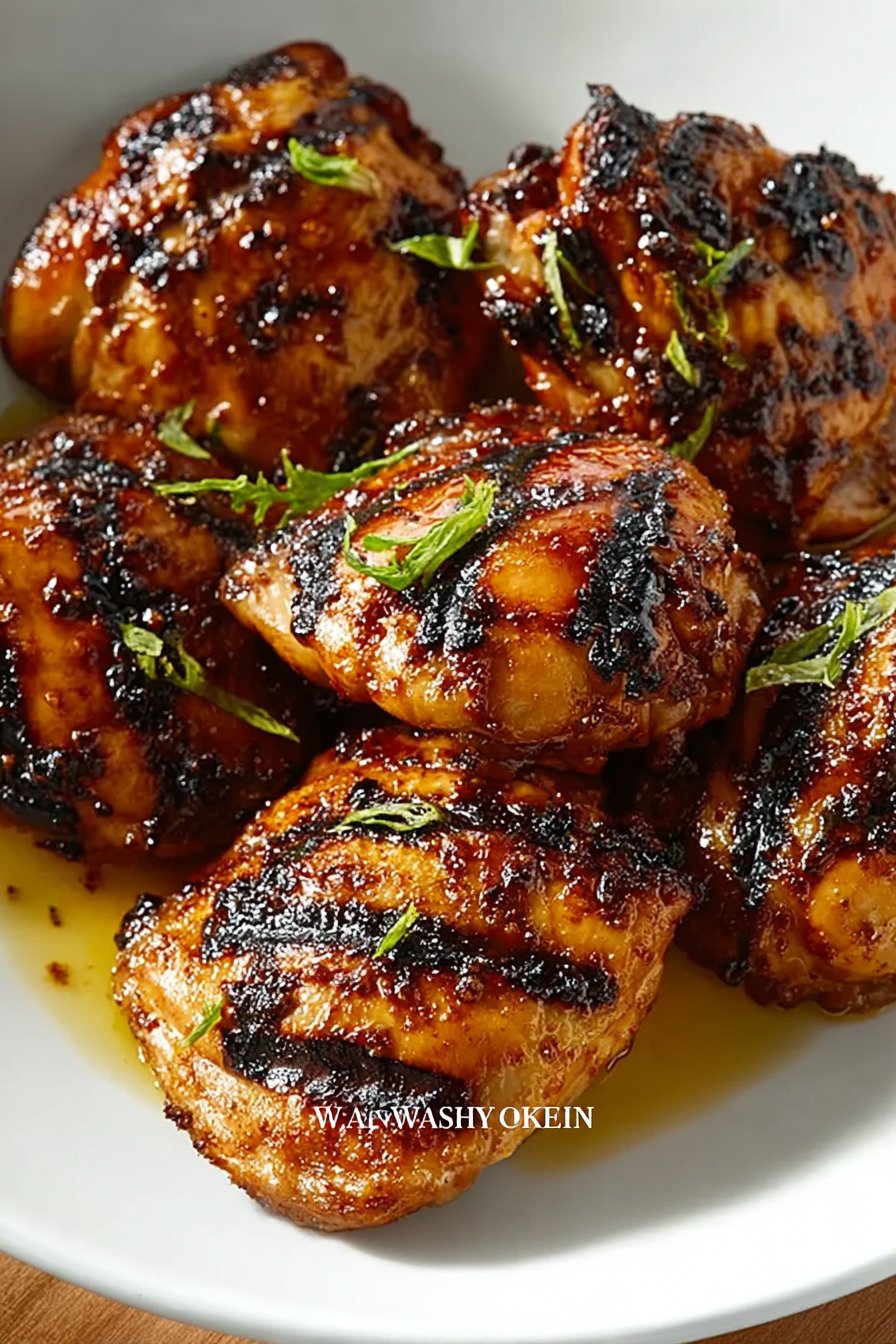
Perfect grilled chicken thighs should look browned with small charred spots, not fully blackened. The surface should be slightly glossy from the marinade, and the edges should look caramelized. When you press the thickest part gently with tongs, it should feel firm but not stiff.
The most reliable doneness signal is an internal temperature of 165°F. The juices should run clear, and the meat should slice easily without looking rubbery or dry. You should smell warm garlic, smoked paprika, and a light grilled sweetness. Failure signs include a bitter burnt smell, sticky black patches from scorched sugar, or a dry, stringy texture after cutting.
11) Professional Secrets Behind Better Grilled Chicken Thighs Recipe
The biggest professional-style secret is managing heat zones. Even if the recipe uses medium-high heat, a grill can have hotter and cooler spots. Start the chicken where it gets a strong sizzle, then move any pieces that color too quickly to a slightly cooler section. This gives you char without sacrificing juiciness.
Another useful technique is keeping the marinade balanced instead of overloaded. Too much sugar burns, too much acid can change the surface texture, and too much salt can dominate the chicken. The small amount of oil, soy sauce or lemon juice, honey or brown sugar, garlic, and paprika works because each ingredient has a clear job.
Finally, rest the chicken on a clean plate, not the same plate used for raw marinated meat. That keeps the finished chicken safe and lets the juices settle. This small detail makes the final bite cleaner, safer, and better textured.
12) Best Dishes or Pairings to Serve With Grilled Chicken Thighs Recipe
Grilled chicken thighs pair well with sides that balance smoky, savory flavor. Serve them with grilled corn, cucumber salad, rice pilaf, roasted vegetables, potato salad, or a crisp cabbage slaw. For a lighter plate, slice the chicken over greens with tomatoes, avocado, and a lemony dressing.
For a heartier dinner, serve the chicken with garlic rice, warm flatbread, beans, or grilled sweet potatoes. The marinade has enough flavor to stand up to bold sides, but it is not so heavy that it overwhelms fresh vegetables or simple salads.
13) Making Grilled Chicken Thighs Recipe Ahead of Time
This recipe is useful for make-ahead cooking because the marinade can be mixed in advance and poured over the chicken the night before. Keep the marinating chicken covered in the refrigerator, then let it sit at room temperature for about 15 minutes before grilling so the chill comes off slightly.
You can also grill the chicken ahead and reheat it gently. For the best texture, reheat covered in a low oven or in a skillet over low heat with a small splash of water or broth. Avoid blasting leftovers over high heat because that can dry the edges before the center warms.
14) Storing Leftover Grilled Chicken Thighs Recipe
Store leftover grilled chicken thighs in an airtight container in the refrigerator for up to 3 days. Let the chicken cool before sealing, but do not leave it sitting out for a long time. If you plan to use the leftovers for salads or bowls, slice the chicken after chilling so it keeps more moisture.
For longer storage, freeze cooked chicken thighs in a freezer-safe container or bag. Thaw overnight in the refrigerator before reheating. Leftovers work well in rice bowls, wraps, quesadillas, chopped salads, sandwiches, and quick meal prep plates.
15) FAQ (Real Cooking Questions)
Can I use bone-in chicken thighs? Yes. Bone-in thighs work, but they usually need extra time on the grill. Check the thickest part near the bone and make sure it reaches 165°F before resting.
Can I make this with boneless skinless chicken thighs? Yes. Boneless skinless thighs are ideal for grilled boneless chicken thighs because they cook quickly and absorb the marinade well. Watch them closely because thinner pieces may finish sooner.
How long should I marinate the chicken? Marinate for at least 30 minutes. For deeper flavor, refrigerate overnight. If using lemon juice instead of soy sauce, avoid overly long marinating because too much acid can soften the surface texture.
Why did my chicken burn on the grill? The grill may have been too hot, or excess honey-based marinade may have dripped into the flame. Use medium-high heat, let extra marinade drip off, and move chicken away from flare-ups.
Is this the best grilled chicken thigh recipe for meal prep? It works well for meal prep because the chicken stays flavorful after chilling. Store it whole when possible, then slice it after reheating or before serving to keep the texture juicier.
16) Save This Grilled Chicken Thighs Recipe Recipe
If this grilled chicken thighs recipe helped you solve dry, unevenly cooked chicken, save it for your next cookout or weeknight grill dinner. The key reminder is: use a balanced marinade, control the heat, check for 165°F, and rest the chicken before serving.

17) Conclusion
Good grilled chicken thighs are not about complicated ingredients. They come from understanding heat, marinade balance, timing, and rest. Once you know why chicken burns, dries out, or tastes flat, the fix becomes simple. Keep the grill steady, let the marinade do its work, and trust the thermometer more than color alone. With those habits, this grilled chicken thighs recipe turns into a reliable method you can repeat whenever you want smoky, juicy chicken with real flavor.
18) Nutrition
Serving Size 1 portion Calories 285 Sugar 4 g Sodium 520 mg Fat 18 g Saturated Fat 4 g Carbohydrates 6 g Fiber 1 g Protein 25 g Cholesterol 135 mg

Leave a Comment